Seventeen credit cards rejected this Nigerian founder. That was just the beginning.
Kredete is revolutionizing diaspora credit and remittance globally. For founder Adeola Adedewe, the mission is personal. Here’s how Endeavor got onboard.

About 10 years ago, Adeola Adedewe applied for a credit card. In return, he got a rejection. And then another. And another. He was eventually rejected 17 times.
The Nigerian entrepreneur had been living in the US for years. He’d completed both his undergraduate and master’s degrees in New York and had stable employment. Despite working, paying taxes, and regularly sending money home to his family, as an immigrant, Adeola had no credit history and no clear path to building one.
So Adeola launched Kredete in 2022 for African immigrants in the US and Canada as a remittance app — with a twist. Unlike other money-transfer apps, Kredete reports each of its customers’ transfers to US credit bureaus, converting existing financial behavior into a credit-building event.
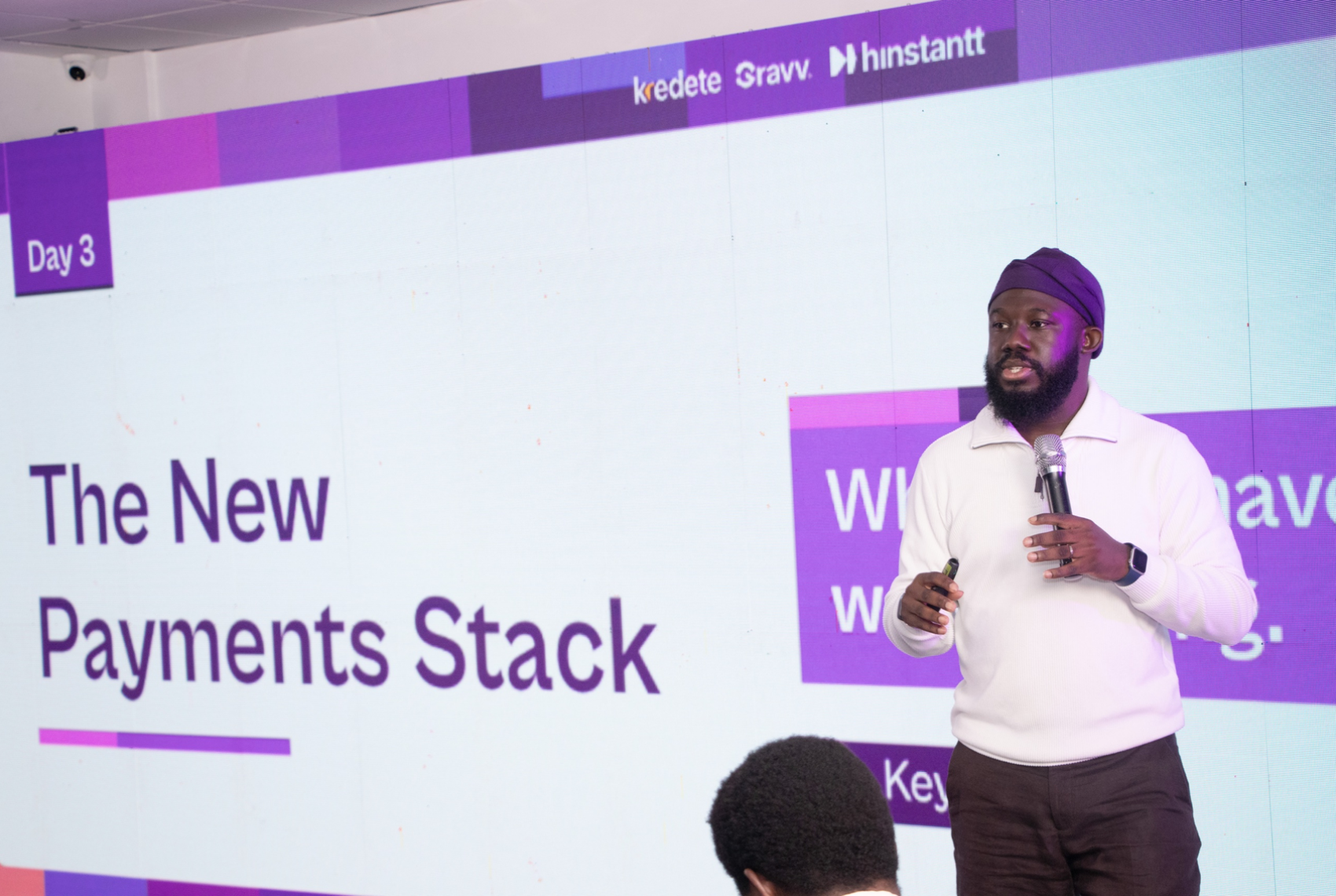
Fast forward a decade, and Adeola encountered another immigrant who was struggling.
“He had lived in the US for over 12 years and had a zero credit score,” Adeola remembered. “He had to pay cash for everything."
If he wanted to buy a car, he had to have the entire cash balance. He never got to buy a house because he couldn’t put the full cash amount down. While lots of his peers were getting mortgages, he did not think that he was qualified.” Only now, this man had Kredete to help him.
Today, Kredete is also a fintech that converts hard currency into dollar-pegged stablecoins, and settles payouts in local currency through direct integrations with banks and mobile money providers across 50+ countries. Kredete serves both diaspora communities sending money home alongside banks, remittance operators, and corporate treasury teams.
“Adeola is a trailblazer,” said Veronica Serra, founder of the growth equity fund Innova Capital. “It’s really amazing what he’s built in such a short period of time, from the real pain that he felt.”
The leap from $50M to $100M — and a secret society to help
Over the past year, Kredete has seen 20-fold growth. It now has over six million B2C customers and 10,000 B2B customers making real-time transfers of close to $6B over blockchain networks. Last year, it closed a $22M Series A round to finance Kredete’s expansion into Canada, the UK, and key European markets.
“I think Kredete can change the landscape in Africa,” said Douglas Storf, CEO and founder of Brazilian fintech SWAP. Both Veronica and Douglas were speaking after Adeola’s International Selection Panel (ISP) — the final stage in Endeavor’s rigorous selection process that led to Adeola becoming an Endeavor Entrepreneur.
Discovering Endeavor, said Adeola, felt like joining a secret society. “I’m the kind of founder who is just very focused on work,” he explained. “I never used to go to social gatherings or events, I just worked and worked and worked.

“But when the Endeavor team first reached out to me, I didn’t know who they were, so I asked around,” he said. “And everyone I spoke to said: You have to become an Endeavor Entrepreneur. My shareholders said, Whatever it takes. Fellow founders said, whatever it takes. It was such recurring advice that I had to take it — and now I go to every Endeavor event and my social calendar is full!”
“Kredete’s story is particularly compelling because of how intentionally Adeola and the team identified and served a real need within the diaspora community,” said Olumide Onakoya, an associate in Entrepreneur Selection and Growth at Endeavor Nigeria. “By going directly to religious worship centres, where large immigrant communities, including many Nigerians, regularly gathered, they were able to reach people who were sending money home to support their families, while helping those same customers build a formal credit history in the process.”
Reflecting on his selection process, Adeola felt he was lacking mentorship in what it took to take the next leap up from $50M to $100M in annual recurring revenue and, through Endeavor, he gained that access.
Endeavor has a unique way of pairing people together,” he said.
“They connect you with the founders or partners that you need at a specific level.
“One of the pieces of advice I was given was that in fintech, your compliance tool is a foundation of your technology,” he said. “And we really invested in that as a result — today, we are one of the most licensed companies across emerging markets.”
A self-perpetuating model for cross-border fintech
“We built the infrastructure first,” Adeola explained, using real-time payments on stablecoin rails so that Kredete’s customers could send money home with the fastest possible method, while simultaneously building credit history in their new country. He based this on what he learned when he worked in the consumer lending division at JPMorgan, where he was responsible for approving cross-border payments from markets including Hong Kong, Singapore, Nigeria, and Cape Town into New York. “I saw how expensive it was,” Adeola said. Not just expensive, but also slow, and intermediary-dependent. His expertise in the financial industry and cross-border payments gave Kredete its impressive scope.
This infrastructure has created a flywheel — increased customer volume creates deeper liquidity, better routing data, and density in specific ecosystems, like Nigeria, he explained. Along the way it reduces cost and improves reliability, enabling competitive pricing and driving further customer acquisition.
“Then we saw that lots of our customers were sending payments to businesses, so we built business architecture on top of the real-time payment system. And now we’ve scaled to payments not just for people or small businesses but banks, fintechs, unicorns, all operating on a direct-to-client architecture.”

But it’s not just Africa that Adeola has his sights set on. Kredete’s impact is two-pronged: on the ecosystems it’s invigorating around the world, and on the diaspora communities living in the US and UK.
“It was extremely important for us that we had an impact-driven part of our business,” said Adeola. “There’s a massive opportunity for immigrants who are sending money to their home countries to actually build foundational credit and get access to the credit ecosystem in the US. One of the things we’ve seen is that it completely unlocked our own ability to create new products.”
When your customers have built credit history, they now want access to credit! That increases the economic activity in the ecosystem."
By building a product that offers greater financial access specifically for immigrants, Adeola is boosting that flowing, flexible ecosystem of the diaspora. Not just regulated to one country or continent, Kredete’s product offers global access in both directions: the immigrants sending money home, and the financial institutions on the other end processing it. That opens up new potential for other fintech products and ties into the larger work Endeavor does in building and boosting ecosystems.
Kredete puts a firm focus on hiring talented engineers and operators across emerging markets, as well as its larger company mission of providing access to until-then closed financial systems. As a result, Adeola is actively training new generations of tech talent across multiple countries, while also providing a bridge between markets, paying the way for other businesses.
The end result is a more interconnected fintech ecosystem, with a level playing field for everyone.
“Kredete is taking access and connectivity a step further by building infrastructure that enables African enterprises, fintechs and banks to connect to a more global financial network,” said Olumide. “They’re creating bridges between Africa and the rest of the world.”
Featured Stories
The fintech unicorn that changed the face of success in Japan

How these Brazilian scientists built Jennifer Aniston and Katy Perry’s favorite skincare brand

Is your support system built for the shadow or the show?

Meet Luca Ferrari, the Italian entrepreneur acquiring all your favorite companies

Related Articles
The fintech unicorn that changed the face of success in Japan
How these Brazilian scientists built Jennifer Aniston and Katy Perry’s favorite skincare brand