Postcards from Elsewhere: Kuala Lumpur, Malaysia
Inherently diverse, KL is gaining recognition as a growing, affordable hub for startups everywhere to establish operations in Southeast Asia.

I remember when I first heard Jerry’s story. He’s from El Salvador, but met his co-founders when they were students in Hong Kong. That’s where they started Respond.io, an AI-powered platform to help businesses scale customer conversations. At the beginning, that location made perfect sense. It was a digital business, a small team… you don’t think too much about cost at that stage. But then the company started to grow, they needed to hire, and the expenses were adding up.
He thought, “Why am I still in Hong Kong?” So he moved. The answer was in Kuala Lumpur.
The advantages in KL are quite straightforward. Cost is one, of course. But it’s not just about being cheap. You get a good quality of life, access to tech talent that is increasingly strong, and everyone speaks English. There’s rule of law, stability, and you’re very well positioned geographically. From here, you can easily reach Indonesia, Thailand, Vietnam…
Maps from Elsewhere: Kuala Lumpur
Discover the places that power one of Southeast Asia's most dynamic entrepreneurial ecosystems.
Few cities reflect the diversity and energy of Southeast Asia quite like Kuala Lumpur. Grab a bite at a mamak stall, stumble into a conversation that outlasts your kopi-o, or pick a rooftop to watch the city’s skyline glow, and you’ll understand why people keep building here. The map below highlights the companies, cafés, coworking spaces, and event hubs that bring the ecosystem to life — and where some of the best connections in Southeast Asia tend to happen.
Singapore has a lot of the same perks, with the addition of being the go-to spot for fundraising. Although it’s more expensive to concentrate operations there, it’s always been a strong choice for entrepreneurs, especially with all the government incentives, and Malaysia took inspiration from there. Now, our government is paying attention to the startup ecosystem as well, making it easier to get a visa, offering grants and even matching international venture capital through Jelawang Capital, a national fund of funds launched in 2024.
So the move to Malaysia has become a pattern in the last few years: founders from everywhere choosing to base themselves in our country, especially (but not exclusively) as a bridge to Southeast Asia. Gil Carmo, from iMotorbike, is from Portugal, but he started the region’s leading e-commerce platform for pre-owned motorbikes from KL. Led by two Korean founders, Paywatch provides workers with real-time access to their earned wages and headquartered here in 2020 by an invitation from the Malaysia Digital Economy Corporation. We have several other entrepreneurs from the Middle East looking to expand and choosing KL as a launchpad. And even outside of our network, you see companies like MoneyLion from the US leveraging that, too. They have around 400 people in Malaysia, mainly in tech and engineering, even though their core product doesn’t serve the Asian market at all.

When you’re a smaller country, you need to know your strengths. Malaysia is obviously not Southeast Asia’s largest market. It’d be quite challenging to build a $1B company by staying local. But it is an excellent place to hub companies growing into larger markets. You build from Malaysia to the world.
That’s how Carsome became our first unicorn. (Grab, the super-app, would have been the first, but both Malaysian founders relocated to Singapore early on, so it’s technically Singaporean — a sore spot for us, let’s not talk about it.) They are present not only in Malaysia, but Thailand, Philippines, Singapore, and Indonesia, and they built Southeast Asia’s largest integrated car e-commerce platform.
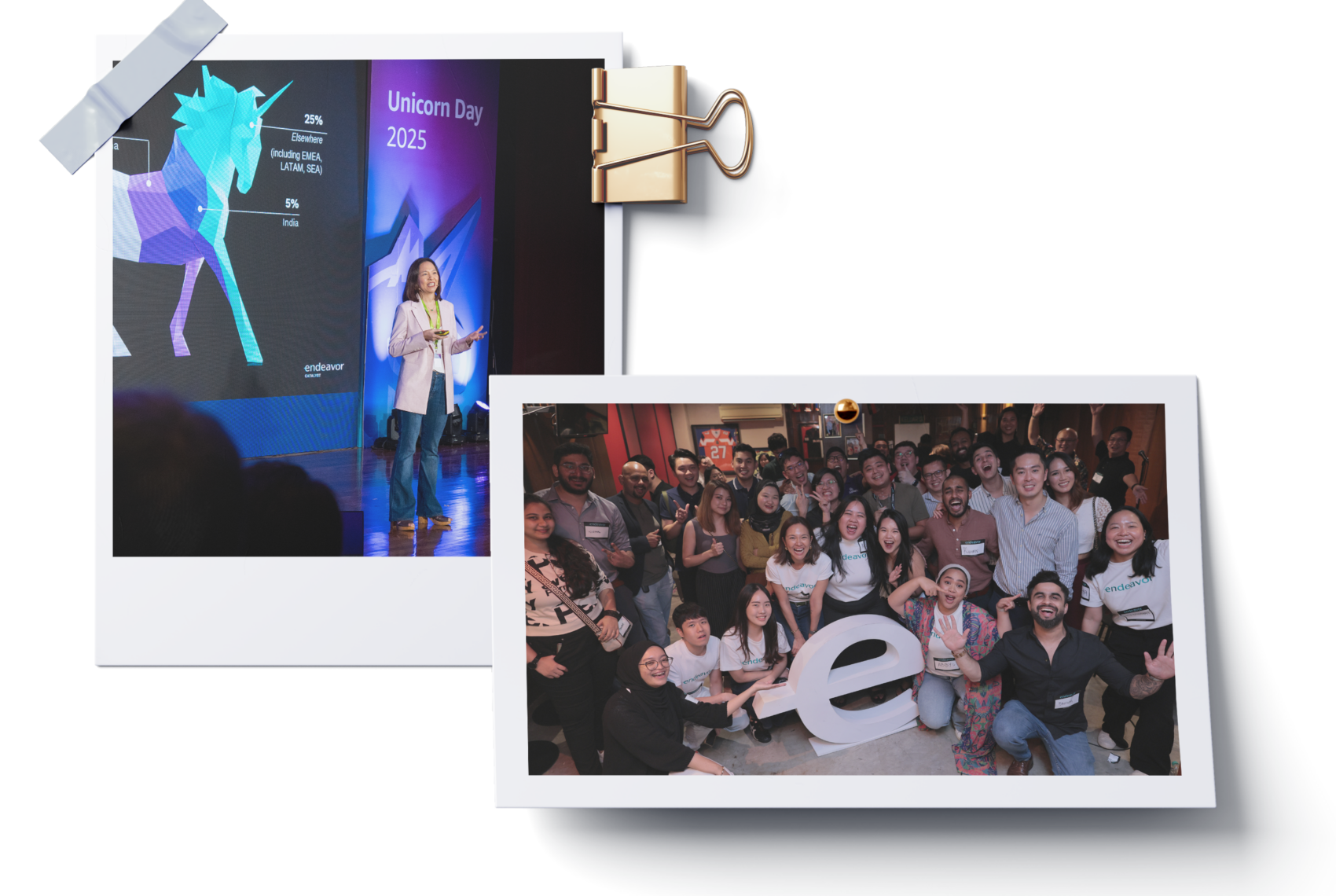
Like them, many Malaysian companies are looking further, even across continents. Respond.io is a good example; they are in 86 countries. JurisTech,a fintech software company specializing in AI-driven lending and credit solutions, is exploring a deeper expansion into Africa, after a successful landing in Uganda. RPG (Rocket Paradise Group), a “house of brands” we just selected for Endeavor, is now entering the Middle East.
The momentum is exciting. We’re starting to see all the success stories we didn’t have 5 or 10 years ago. I’m confident that, especially as they scale further, the flywheel will turn at full speed, generating even more companies that are global in nature.
Kuala Lumpur may never be the biggest or the loudest ecosystem in the region, but it’s one of the smartest places to build from. It is spinning up — and flywheels, once moving, are hard to stop.