Cashea: The Fintech Giving Venezuela Fresh Hope
Venezuela went almost a decade without formal consumer credit, until Cashea brought it back and "cashear" became an everyday verb. After disaster struck in June 2026, that same foundation of trust is helping people get back part of what was lost.
In June 2026, Cashea’s team was ecstatic: A fresh $60M Series B round brought that year’s total funding to $100M, fueling them to keep powering everyday commerce in Venezuela. Only days later, however, their joy gave way to grief and concern.
On the evening of June 24th, two large earthquakes hit the country, 39 seconds apart. The shocks measured 7.2 and 7.5 on the moment magnitude scale, with epicenters about 160 kilometers (100 miles) west of the capital city of Caracas. Thousands were killed and injured, tens of thousands remain missing, and widespread emotional and material damage continue to devastate communities nationwide.
Despite their personal losses, Cashea’s team rolled up their sleeves. “The disaster changed the lives of millions of Venezuelans, so it also changed our priorities,” said co-founder and CEO Pedro Vallenilla. He started the company in 2022, following almost a decade of nonexistent formal credit, to provide fully digital, instant, zero-interest installment financing for Venezuelans. In the three weeks following the earthquakes, Cashea waived more than $5M in late fees, advanced close to $5.5M in cash for merchant liquidity, widened credit access to over 750,000 users, and donated $520k for emergency relief. Through a campaign called Venezuela, Creo en Ti (“Venezuela, I believe in you”), Cashea is giving more time, flexibility, and opportunities to people who are reorganizing their finances.
This response is a continuation of Cashea’s mission and dedication to their country. Years before, we had already identified in the founding team something that would prove essential in this moment: a refusal to wait for ideal conditions before acting. Endeavor does not have an office in Venezuela yet, so we first learned about Cashea through a cold email to Endeavor Argentina, where two of the four co-founders are based.
“From the very first conversation, it was clear this wasn’t just a fintech play. They were obsessed with solving a real problem for real people in one of the hardest operating environments in the region. That’s exactly the kind of resilience and purpose we look for,” said María Julia Bearzi, managing director of Endeavor Argentina.
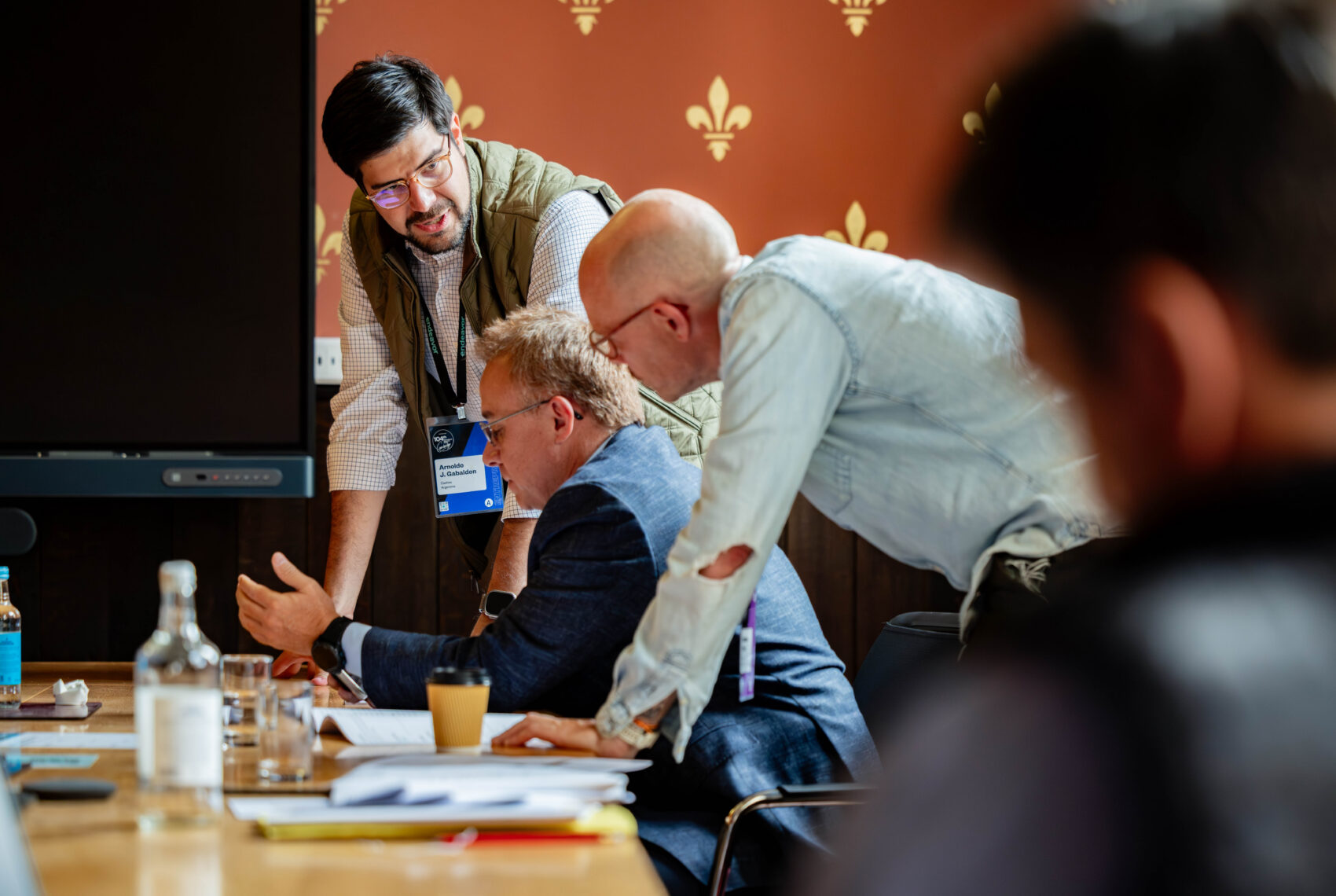
What started with an invitation to join a local event turned into a spot in Endeavor’s competitive ScaleUp Program, created to accelerate high-potential startups at an earlier stage. Then, in 2024, they started the rigorous selection process to become an Endeavor company, which accepts approximately 1% of all candidates we meet with. Cashea was approved at our International Selection Panel (ISP) with flying colors, getting a unanimous vote in the first round. Most panelists called it the most impressive candidacy they’d seen.
Rebuilding credit and trust from zero
In 1999, Venezuela was still one of Latin America’s major oil economies amid a historic commodities boom. Oil prices surged, and the state expanded. Up until the early 2010s, Venezuelans still relied on banks and credit cards. But when oil prices crashed in 2014, the financial model imploded. According to Bloomberg, Venezuela’s economy ultimately contracted by roughly 80% over two years — one of the worst peacetime collapses in modern history.
Shelves emptied, power blackouts became routine, and millions fled the country. Hyperinflation took hold; in 2021, a cup of coffee in Caracas cost 7.8M bolivares. The currency crumbled, savings were wiped out, and institutions stopped lending, leaving over 20 million people without access to credit.
“Trust was broken,” explains Cashea’s co-founder and CEO Pedro Vallenilla. As a serial entrepreneur, he believed he could change his country’s reality.
While still in university, Pedro discovered the group-buying model popularized by Groupon and brought it to Venezuela through TuDescuentón, which sold over a million coupons before its exit. That business’s success led Pedro to believe that building a company was straightforward. What followed, however, was nearly a decade of new launches that either failed to scale or collapsed altogether, including Elemétrica, a data platform for retailers, and Meser, a performance assistant for restaurant staff.
As those ventures stalled, financial pressure mounted. Facing credit-card debt himself, Pedro took a job at Colektia, where he worked on loan recovery and credit risk across Latin America. There, he realized that while many companies lend money, very few understand how to collect — and that repayment could be reframed as giving people a second chance. “When trust is created, trust is given back,” Pedro said.
Solving the trust gap became the foundation for Cashea. As of December 2025, 10 million people — half of the adult population — had downloaded the app. Having surpassed 110 million transactions, Cashea is the largest provider of consumer credit in the country and one of the biggest buy-now, pay-later (BNPL) players in Latin America. Cashear has become a verb, like “to Google” or “to Uber.” Cashéalo, heard in a reggaeton song and now part of everyday speech for millions, has become shorthand for “just pay in installments,” as if to say: There’s an easier way now.
" You hear about these category-defining brands that become the name for the thing they sell: Kleenex, Velcro, Tupperware. You never think the brand you’re building is a Kleenex."
Arnoldo Gabaldón
Co-Founder and CFO, Cashea
Still, the journey was rocky from the start. When Pedro first sought government approval to operate, Cashea was rejected multiple times. Months went by with no progress. At that moment, everyone told him to give up.
Instead, Pedro turned to his longtime friend Roger Laughlin, a Venezuelan Endeavor Entrepreneur and co-founder of used car marketplace and Mexican unicorn Kavak. Roger had been through this process before, having to fight for permits and build an entire infrastructure around his company before being able to focus on its core business. “Linger on,” he told Pedro. “When this happened to us in Mexico, that’s when we knew we were on to something.”
Cashea persevered for over a year until they were legal and ready to launch. Ignoring the naysayers, the company gave the Venezuelan people a vote of confidence: credit in a country where credit didn’t exist at zero percent interest.
One would think demand would be so high that the app would crash, but that was not the case. Two weeks in, Cashea had very few downloads and no transactions.
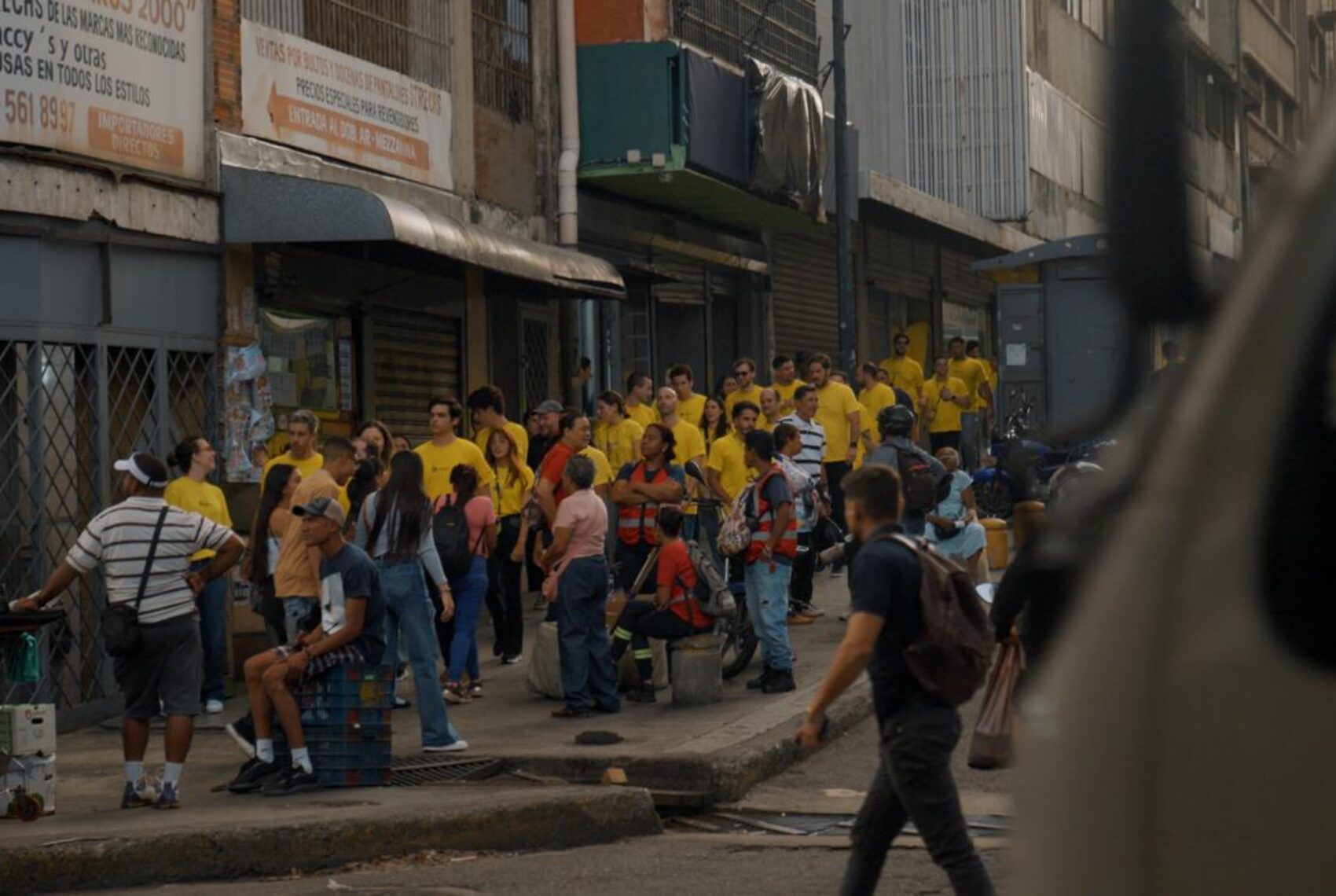
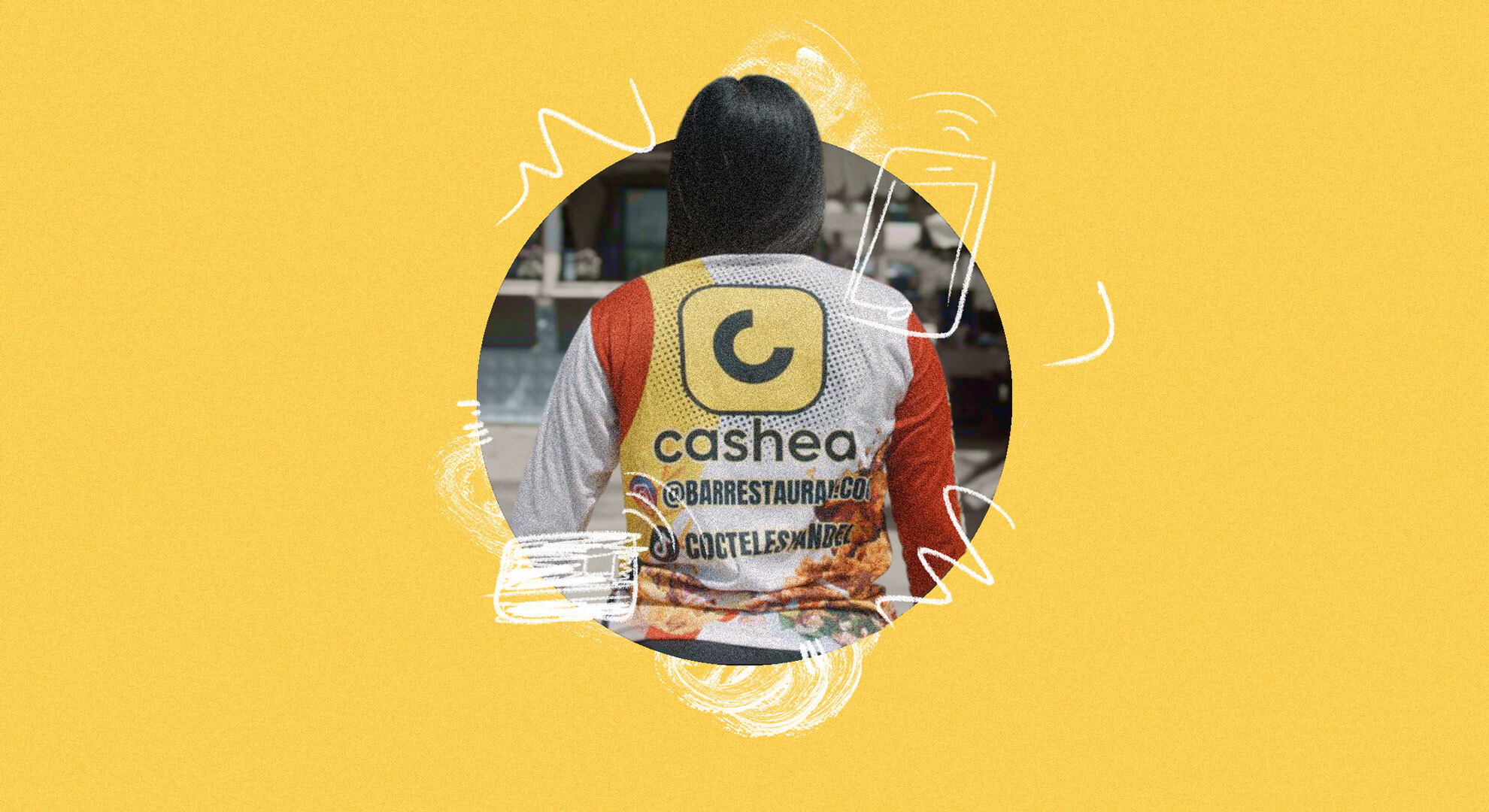
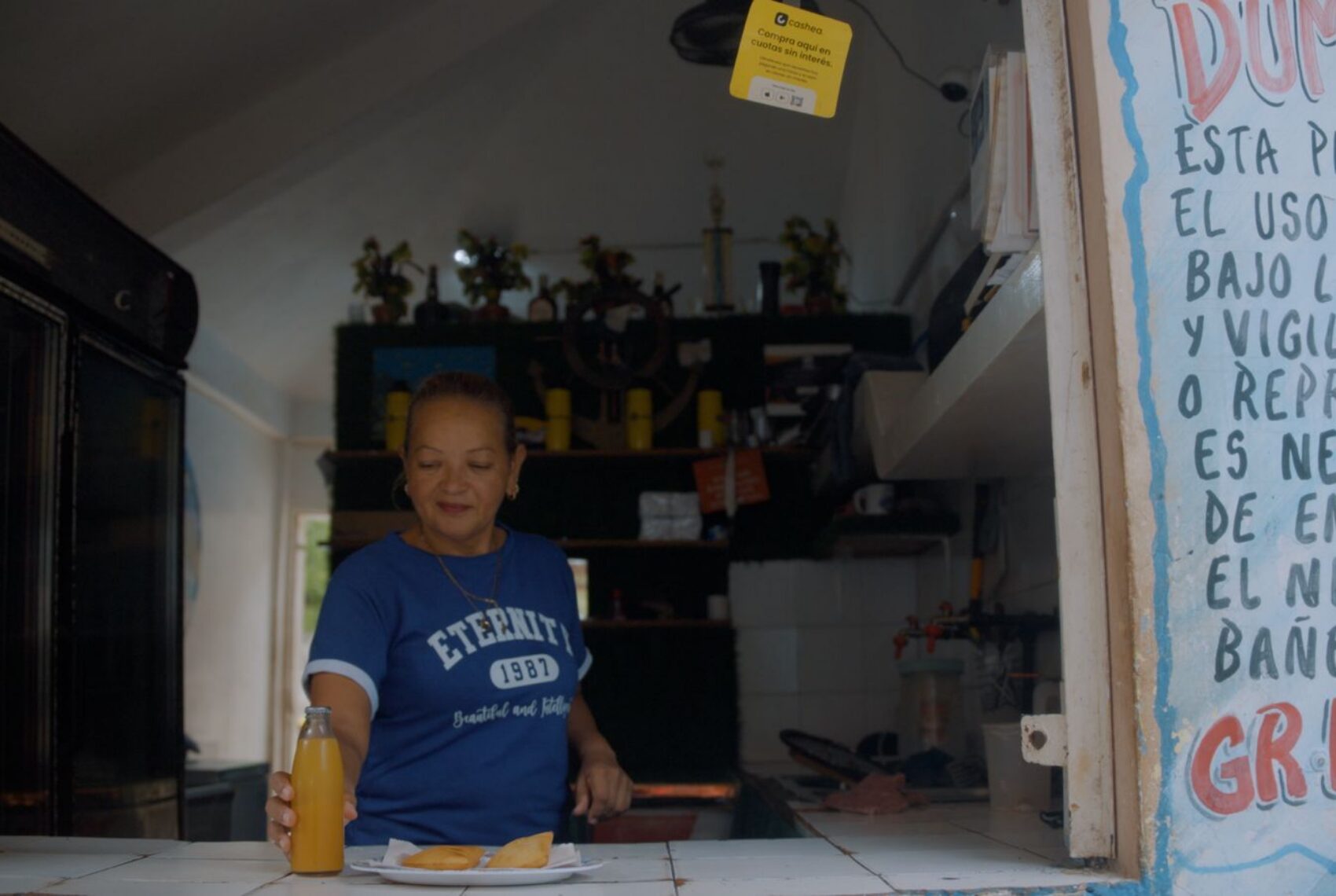
They quickly figured out that their go-to-market strategy was all wrong. Instead of trying to bring people online, they needed to meet them where they were: offline. Cashea started placing ambassadors directly at the points of sale while wearing yellow (the brand’s color), who helped onboard customers in under three minutes.
After this pivot, they hosted $10,000 worth of transactions in one month. Another month went by, and they got to $25,000. In the third month, they reached $450,000. In the three years that followed, that number increased by more than a thousand times.
There's a before and after Cashea in the Venezuelan economy.
Cashea encourages responsible spending, increasing spending limits and number of installments as users repay their debts, allowing them to “level up.” Through this system, Cashea has kept its overall NPL (Non-Performing Loan) rate at only 2.5%, meaning that 97.5% of users pay on time.
On the merchants’ side, until recently, Cashea did not finance loans directly. Instead, the merchants bankrolled their own account’s receivables, while the company managed origination, collections, and risk analytics, only acquiring outstanding loans in the event of missed payment. As a result, merchants didn’t absorb the operational burden or risk, but increased their average revenues by 20-30% and average ticket sizes by up to 60%.
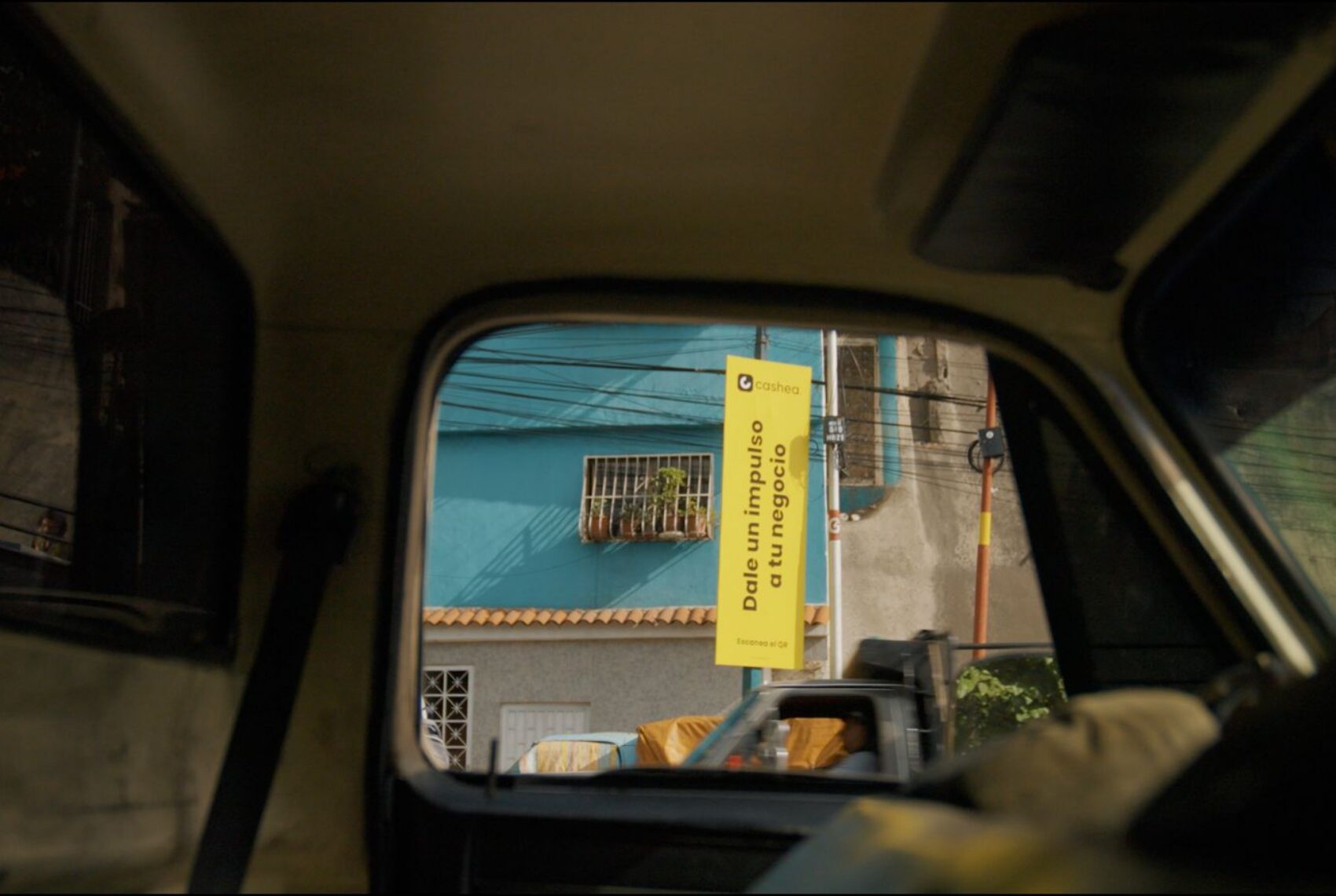
Now on track to become a lender, Cashea is embedded in how money flows in the country. Its famous yellow stickers can be found in stores in all major cities, signaling that it’s an accepted method of payment.

110 million stories, one country transformed
Cashea’s team is built on decades of trust. Pedro, the CEO, is the cousin of Nicolás Curat (CTO) and has known Ramón Lange (COO) and Arnoldo Gabaldón (CFO) since school.
Like much of their team, Pedro, Nicolás, Ramón, and Arnoldo are part of the Venezuelan diaspora — one of the largest in the world, numbering around eight million people. Based across Argentina, Colombia, and Mexico, they lead an organization distributed throughout Latin America.
Though the numbers and stories signal the impact of their company, it’s when they meet their fellow countrymen and women that they can feel it the most.
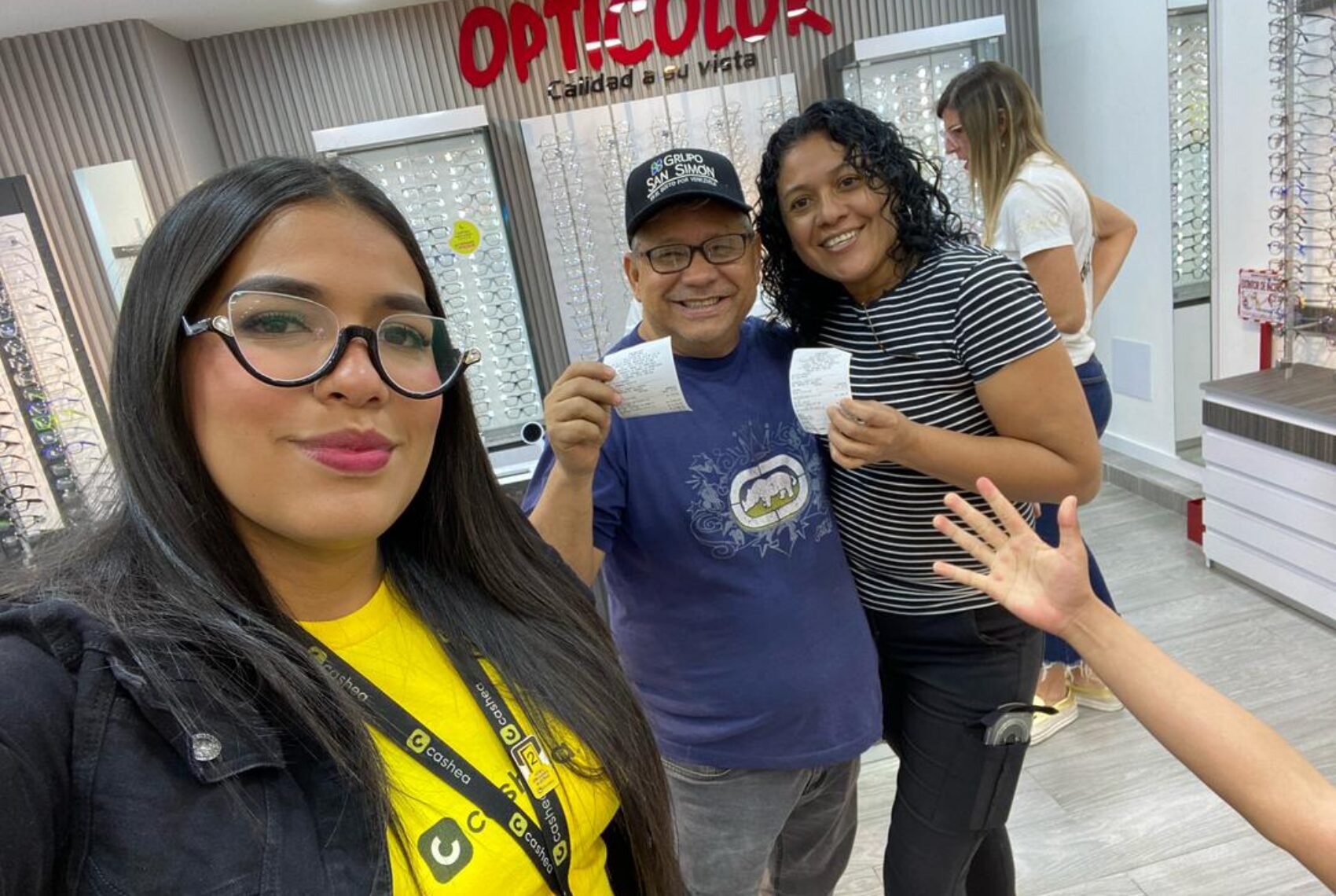
In WhatsApp groups, ambassadors share daily reports of being thanked and hugged on the streets when wearing their iconic yellow shirts. In Caracas, a lady at a store was casheando a phone to her sister while telling the stranger next to her she didn’t understand how the founders made this happen, not knowing the stranger was Nicolás, a founder himself.
At a retreat in Colombia, where half of diaspora Venezuelans live, a waiter saw the logo on the team’s shirts and immediately started crying. He told them that he used the app to pay for his mom’s recent medical exams, which confirmed that she was cancer-free.
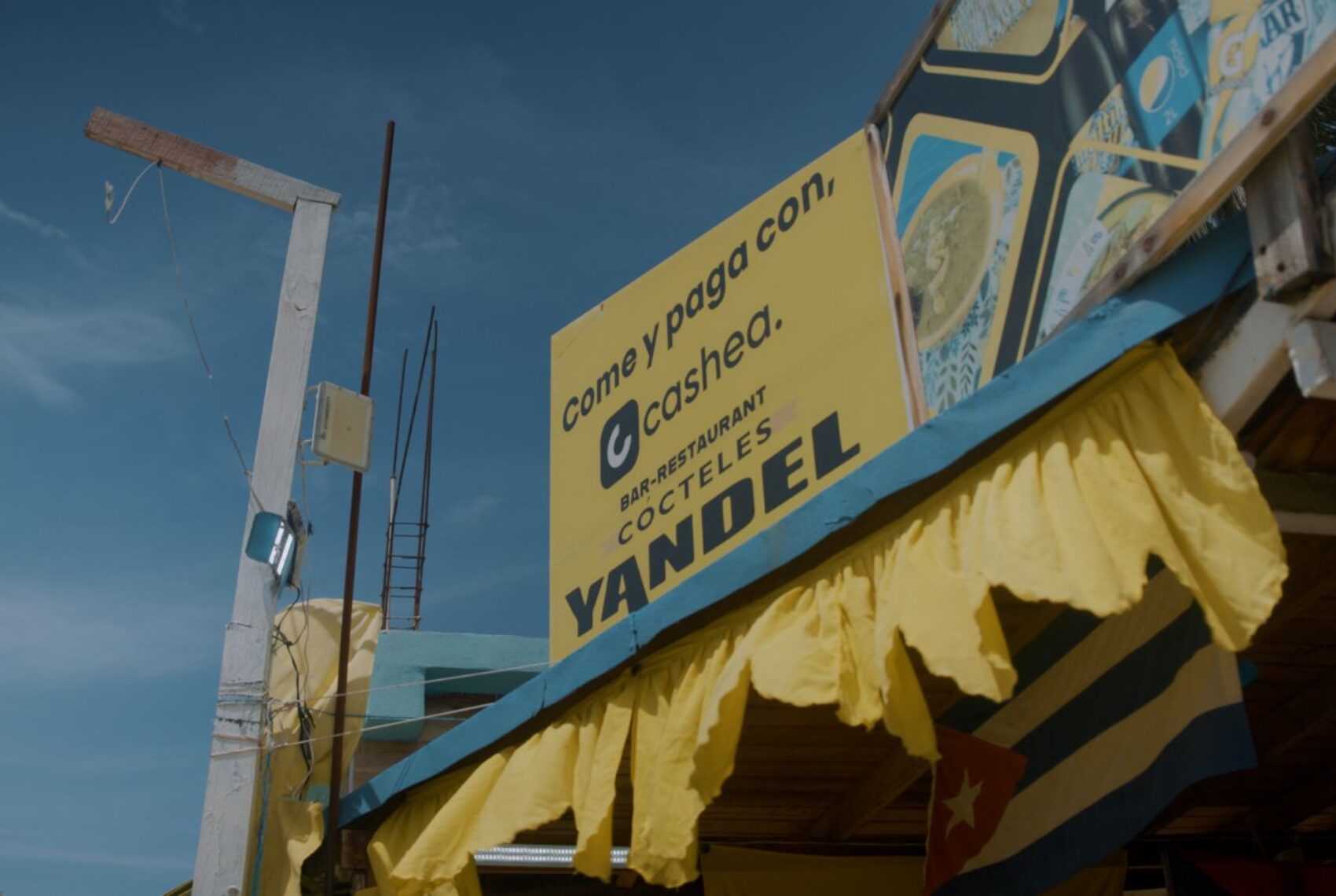
These and the 110 million other stories Cashea has enabled are a big part of what makes the four-way partnership work:
“We’re building something bigger than us. Purpose unites us. We suffered through what we’re trying to solve. Cashea is a homecoming, a way to give back to a country that, even if it saw us leave, gave us everything,” shared Pedro. “If we were doing AI in Silicon Valley, I don’t know if it would have held up this well.”
Committed to making an impact beyond its business model, Cashea is also opening doors to future generations through “Generación Impulso.” The initiative has already brought robotics, programming, and electronics into the classrooms of more than 7,000 public-school students in Venezuela.
This initiative is a living example of Endeavor’s Multiplier Effect: when entrepreneurs grow, their impact radiates outward, creating a virtuous circle that inspires and empowers entire communities.
“What they’re building, why they’re building it, the stories, the WhatsApp group with all their ambassadors… you don’t usually see that in credit and lending,” reflected Vinnie Lauria, managing partner at Golden Gate Ventures and one of the panelists at the ISP. They added that Cashea did in three years what other companies rarely accomplish in ten, by growing into a love brand with incredible social impact and unit economics.
“That is one of the reasons they will benefit from Endeavor: navigating the beast of scaling that fast,” noted Endeavor Entrepreneur Danila De Stefano, the CEO and founder of Unobravo. Along with the big operational risk of high growth comes volatility and political risk. Yet when the founders were grilled about different possible scenarios, they seemed to have thought through them all, while staying humble and open to feedback.
“They are everything Endeavor stands for,” highlighted Mariano Gomide de Faria, Endeavor Entrepreneur and co-founder of VTEX, who emphasized their passion, strategy, execution, and, of course, the mission.
Today, cashear is a signal that trust can scale, that systems can be rewritten, and that even in the most fragile environments, new financial infrastructure can take root. In Mariano’s words: “They represent more than just a company, but the rebirth of an old country.”
Featured Stories
How these Brazilian scientists built Jennifer Aniston and Katy Perry’s favorite skincare brand

Is your support system built for the shadow or the show?
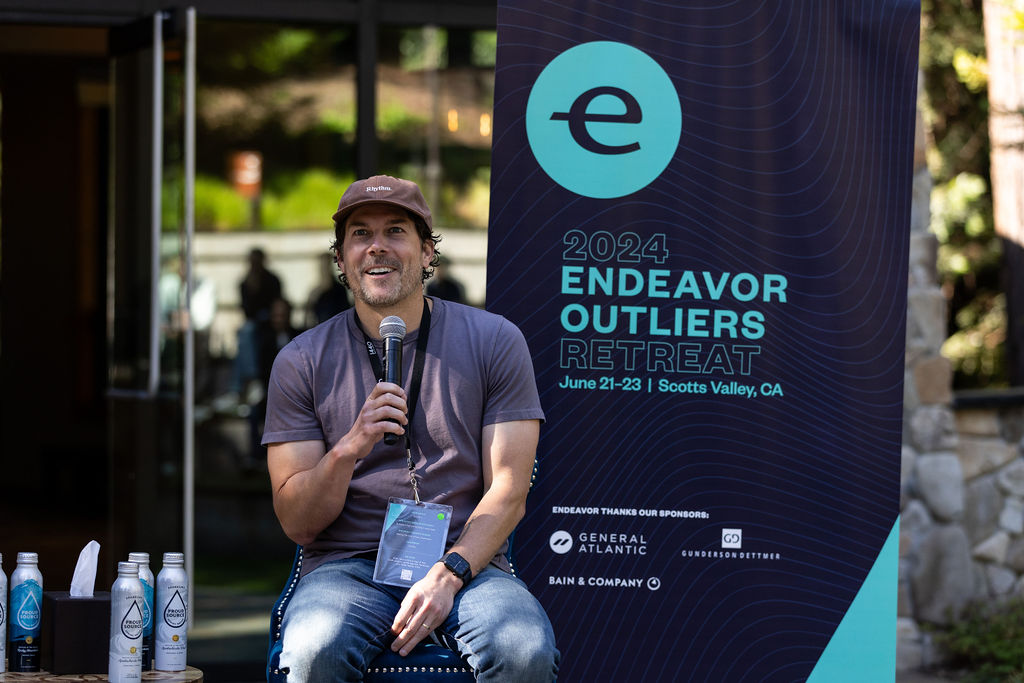
Meet Luca Ferrari, the Italian entrepreneur acquiring all your favorite companies

When the Best Way to Scale Is to Start Over: Why We Selected Polish AI Infrastructure Startup Genesys AI
Related Articles
How these Brazilian scientists built Jennifer Aniston and Katy Perry’s favorite skincare brand
Is your support system built for the shadow or the show?