Japanese entrepreneurs are leveling up: Endeavor CEO Linda Rottenberg explains how
Our CEO Linda Rottenberg recently sat down with Japanese news app NewsPicks to discuss entrepreneurship Elsewhere, the founders competing with big tech, and Endeavor’s new Global Hub. Read the full interview.

In early February, Linda Rottenberg, CEO of Endeavor, sat down for an interview with NewsPicks to discuss Japan’s startup ecosystem, meeting with government officials and others crucial to the scene.
First published in Japanese by Uzabase, Inc. on NewsPicks. Interview by Kengo Ito, NewsPicks Premium Business Division. Translated into English, with a few adaptations for clarity.
NP: First, for readers who don’t know Endeavor, could you tell us what you do?
LR: We run one of the world’s largest entrepreneur networks, for entrepreneurs everywhere who hold crazy dreams.
Back in 1997, when I co-founded Endeavor, the people around me called me the “crazy girl.” Nobody believed that startups worth billions of dollars could grow in emerging markets outside of Silicon Valley or New York — the places we call “Elsewhere.”
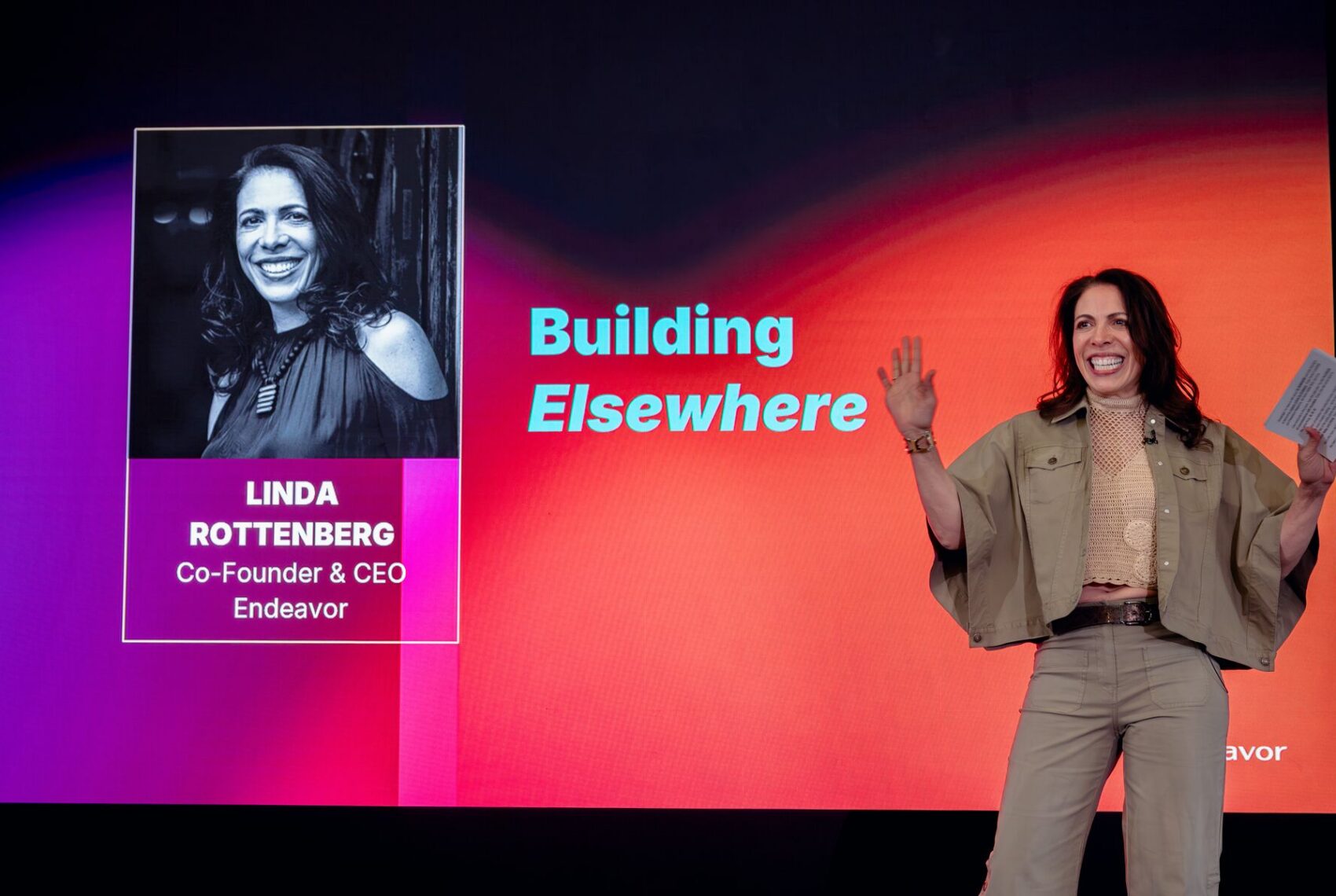
But now, 27 years later, we’ve been able to produce results that astonish the very people who once doubted us.
NP: You visited Singapore before coming to Japan this time. Was that also to support entrepreneurs Elsewhere?
LR: Yes. I had two very important pieces of work in Singapore.
One was holding an International Selection Panel (ISP). This is the final gateway where entrepreneur candidates chosen from around the world gather and, after a rigorous review, are selected as Endeavor Entrepreneurs. We choose entrepreneurs with high-growth potential and a strong desire to give back to society. This ISP actually featured one new proptech company from Japan, Matsuri Technologies, whose founders made it through the final interview to become Endeavor Entrepreneurs. That makes me truly proud.
My other task was establishing a new Endeavor Global Hub in Singapore. We have bases in countries around the world, including Japan, and the startups that have grown in each region began to say, “We want more access to global capital and markets.” So, following London, New York, and others, we made Singapore a hub as our base in Asia.

By creating hubs like this, we provide opportunities for entrepreneurs in each country to connect across borders and generate chances for M&A and partnerships.
NP: Since founding Endeavor, you’ve consistently supported entrepreneurs in regions other than the “meccas” of entrepreneurship like Silicon Valley. Why?
LR: Because talent is universal, but opportunity is not.
Today, roughly half of the world's GDP is generated by so-called emerging and growth markets. And yet, only 8% of the world's venture capital flows into these regions. That's far too great an imbalance.
In our early days, people said our thinking was provocative. But look at the companies Endeavor has supported. Argentina’s Mercado Libre has grown into a giant e-commerce company now called the “Amazon of Latin America,” with a market capitalization exceeding $100B. Brazil’s Nubank has disrupted the existing banking system and become one of the world’s largest digital banks.
We want to shine a light on talent the world hasn’t found yet, and help those people change the world. To that end, last year we even launched a magazine called Elsewhere to tell these stories.

US-China “AI domination” is a risk to humanity
NP: That said, most of the recent disruptive innovation — generative AI — has been created by Big Tech in the US and China. How do you see this situation?
LR: You’re right that, backed by overwhelming financial firepower, the giant companies of the US and China are leading the race to develop AI models. But that doesn’t mean innovation can only happen there. I have concerns—including ethical ones—about Big Tech monopolizing the market.
Last year, when I met Demis Hassabis, the founder of Google DeepMind, at the Acropolis in Greece, he said something interesting: “The purpose of AI is not to make humans pets. It’s to make humans superhuman.”

I agree. But does every player in Silicon Valley and China think that way? Among some, you can see moves that prioritize efficiency and profit over humanity.
That’s exactly why the role of entrepreneurs based in Elsewhere becomes important. Because they are deeply rooted in their own local communities and social issues, Endeavor Entrepreneurs know how to use technology in a way that doesn’t leave humanity behind.
NP: What should entrepreneurs Elsewhere keep in mind as they compete with the AI giants?
LR: The answer is clear: focus on the application layer and solving real-world problems.
Even if it’s the big US and Chinese companies that build the LLMs underpinning generative AI, deciding whose problem to solve, and what problem can only be done by people who know local challenges inside and out.
Poland’s ElevenLabs is a good example. They started developing out of a local frustration — “the dubbing of films into Polish is terrible” — and now they’ve become one of the world’s top voice-AI platforms, valued at over $11B.

Labor shortages in agriculture and food service, the care-giving problem, regional finance… In the local world, there’s a mountain of “urgent, physical problems” that need solving. Rather than staying confined to the world of software, use AI to eliminate the inefficiencies of the real world. This is exactly where there’s a huge opportunity that US and Chinese tech can’t break into.
Japan’s winning path is “AI in physical space”
NP: In Japan, people often say, “Japan is strong in manufacturing, so we can win with physical AI.” Do you actually think Japanese entrepreneurs have a chance?
LR: Very much so. You could even say Japan has a superpower.
The other day, when I met Oki Matsumoto, chairman of Monex Group and a former director of Endeavor Japan. He told me this: “Just as Silicon Valley has the ‘PayPal Mafia,’ Japan has the depth of talent of something like a ‘Sony Mafia’—people who inherit advanced technology and a manufacturing DNA.”
The evolution of AI is now beginning to seep out from digital space into physical space. To achieve AGI (artificial general intelligence), AI will need to be able to understand and manipulate the physical world. With its world-class track record in fields like robotics, deep tech, and precision machining, Japan has the potential to become a leader in the realm of physical AI. But, to get there, a change of mindset is necessary.
When I first visited Japan in 2019, honestly, I felt a little frustrated. That’s because many entrepreneurs were satisfied with a “small IPO” on the Mothers market (now the Growth market). If you go public at a market cap of around $20M (roughly ¥3B), you can’t secure the growth capital you need afterward, and you can’t become a unicorn that competes on the world stage.
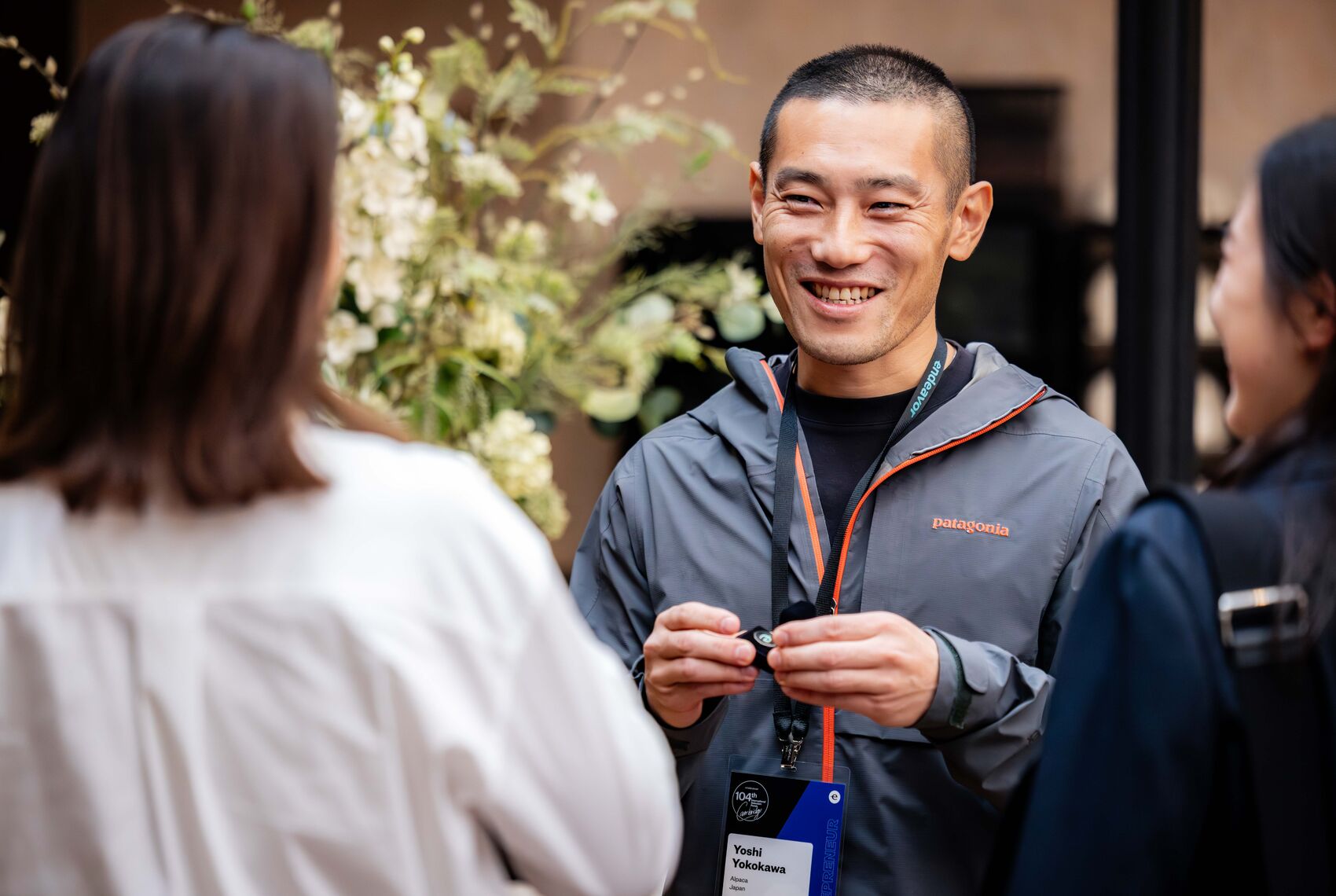
But lately, seeing entrepreneurs who aim at the global market from the start — like Alpaca, the fintech startup that Japanese entrepreneur Takeshi Yokokawa co-founded in California, which has raised large rounds while staying private — I feel great hope.
Don’t make AI your co-founder
NP: Let me ask about how to launch a startup from a different angle. These days, there’s a narrative that, if you leave coding and management to AI, even one person alone can build a unicorn company.
LR: Right. I hear that sometimes, too.
NP: In this era, is there still meaning in “starting a company together with comrades?”
LR: Certainly, with the spread of coding agents and “vibe coding” using generative AI, it’s become easy to build an MVP (minimum viable product) even without a co-founder to handle product development. In the early stage of a startup, you can probably run on your own.
But if you’re aiming to scale, that’s a different story. Because when an organization scales, product development isn’t your biggest issue. It’s the “human” problems: team discord, hiring failures, conflicts with investors. When you hit walls like these, AI won’t give you the answers.
ChatGPT and Gemini may serve up pleasant flattery like, “You’re a wonderful founder!” or “That idea is the best!” but, often, that isn’t the truth. What you really need is a co-founder who points out harsh realities, and a team that can share the pain.
The process of overcoming the complexity of human relationships and building an organizational culture is something AI can never replace.
NP: To press the question further: will the value of an entrepreneur network like Endeavor also change? We live in an era where, if you want startup know-how, AI will teach you in seconds.
LR: I can say with confidence that the value of networks and mentors is higher than ever. AI gives you information, but it doesn’t give you genuine practical wisdom or informed empathy.
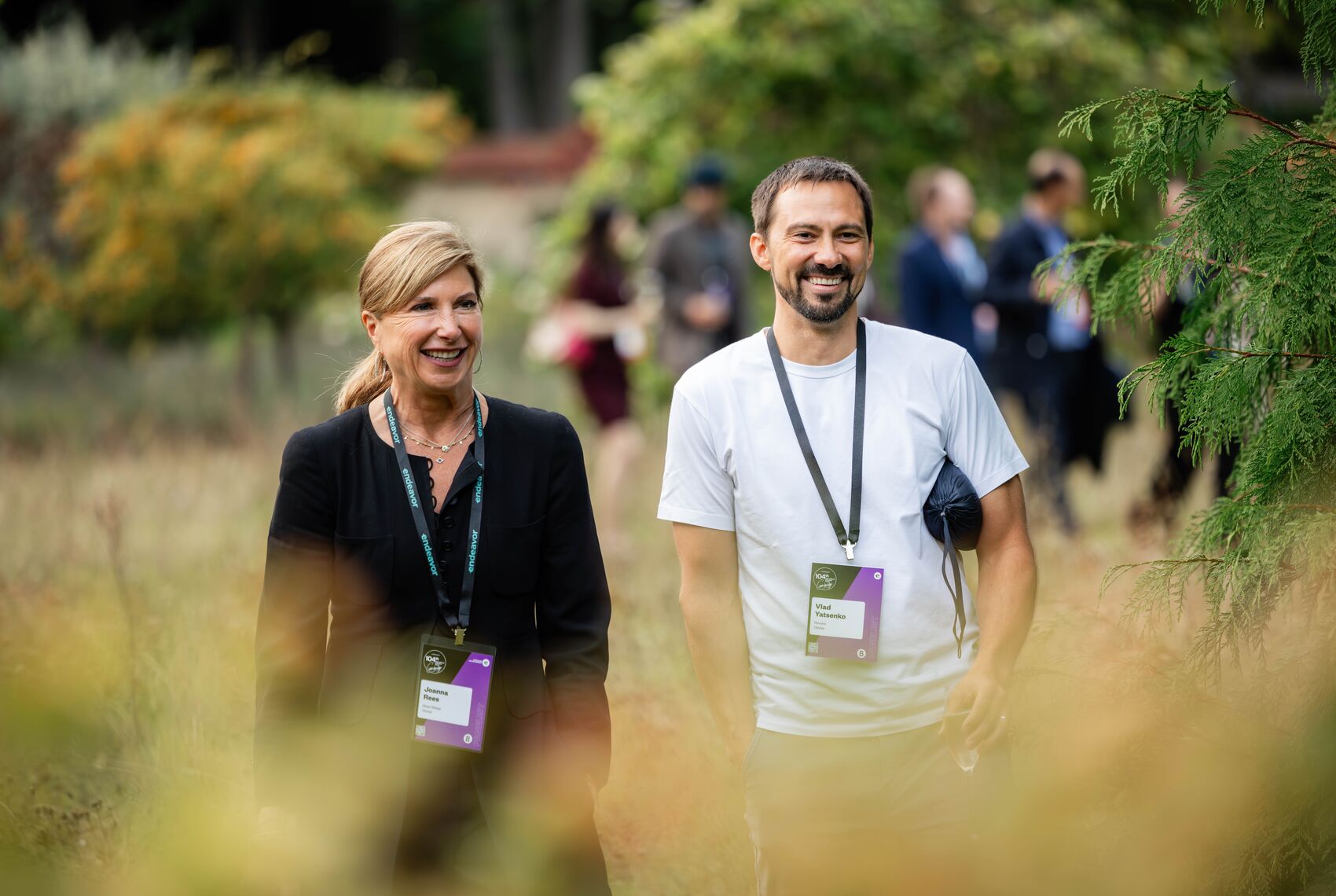
Recently, Vlad Yatsenko, co-founder of the UK fintech unicorn Revolut, became an Endeavor Entrepreneur. When I asked him why, he said, “I wanted a community of people who share the same aspirations. Because it’s lonely at the top.”
No matter how smart AI becomes, it can’t deliver the tough love — loving advice that includes harsh criticism — that comes from entrepreneurs who have been through hell and back. If anything, in a world where trust is shaken by things like fake news, I’m convinced that Endeavor’s Global Network of Trust will become the most valuable asset of all.
Right now, Japan has momentum
NP: Finally, if you have any concrete plans for how Endeavor will develop in Japan going forward, please tell us.
LR: Actually, I’m revealing this here for the first time: we are moving ahead with plans to hold an ISP in Kyoto in October. It will be a major event that brings the world’s top entrepreneurs and investors to Japan.
We believe we can fully support the Japanese government’s goal of “creating 100 unicorns.” We have a track record of making that happen around the world.
NP: What are your hopes for Japanese entrepreneurs and the startup ecosystem as a whole?
LR: My message to Japanese entrepreneurs comes down to the title of my own book: Crazy Is a Compliment! Don’t be afraid of what people will say — be more ambitious.
The other day, I was talking with a group of Japanese entrepreneurs. When they said, “We aim for 30% growth a year,” the foreign investors and mentors present were surprised and asked again: “30%? Don’t you mean 100%?” At which point they hastily revised it to, “Well then, how about 60%?”
In Japan, 30% growth may be considered wonderful, but if you're aiming for a world-class unicorn, you need a crazier goal. I want to tell them: "Don't settle for small!"
I also have a request for investors: please don’t rush entrepreneurs into IPOs just to lock in short-term profits. What’s needed is “patient capital” that lets companies carefully build value while staying private and develop the stamina to win on the world stage.
Right now, I feel real momentum in Japan. There’s technical strength, excellent talent, and government backing. All that’s left is to switch the mindset to a global one.
Featured Stories

Unicorns aren’t the end of an ecosystem’s success. They’re the beginning.


Beyond Skyscrapers: What’s Really Powering Entrepreneurial Innovation in Dubai

Related Articles