Postcards from Elsewhere: Warsaw, Poland
Postcards from Elsewhere is a journey through the world’s fastest-growing markets. In Poland, a new generation of technical founders is turning deep expertise into global companies.

People are often surprised that Polish entrepreneurs are behind some of the biggest companies in the world. Wojciech Zaremba is the co-founder of OpenAI. Jarek Kutylowski is the CEO and founder of DeepL. Marcin Żukowski is the co-founder of Snowflake Inc.
If you understand the history, it’s not a surprise, especially given these particular companies’ deep-tech roots and mission. In Poland (and across Europe, to an extent), we’re seeing the rise of the technical CEO, as opposed to the more common consulting profile that global startup scenes are used to. Our strong engineering talent — more than 430,000 developers, one of the largest pools in the world — translates into areas like robotics, AI, logistics, and cybersecurity.
But we also have a very young entrepreneurial scene. After all, Poland’s modern economy is young! When Poland became democratic in 1989, the country was starting from far behind most of Europe, let alone the US. The focus was on opening borders, entering free markets, integrating with the EU. Catching up. And it worked.
Poland experienced 28 consecutive years of growth from 1992 to 2019, the longest streak in the EU and the only EU country to avoid recession during the 2008-09 financial crisis. In terms of purchasing power parity, our GDP-per-capita has now surpassed Japan’s. That’s an extraordinary turnaround. But for founders with global ambition, it still wasn’t enough. Capital, networks, and scale lived elsewhere. One week of venture investment in London was the equivalent of an entire year in Poland. So the first founders — people like Wojciech and Marcin — went abroad.
Now, the second generation is here. These founders are drawn to opportunities overseas, but maintain their roots in Poland. They often ensure they have a registered entity in Poland. They hire Polish talent, particularly engineers. And once their company reaches a certain scale or they exit, they come back to Poland to look for new opportunities to connect with other entrepreneurs or to share their knowledge.
Stefan Batory, the co-founder and CEO of the beauty-industry-focused booking app Booksy, trained as a mathematician. Rafal Modrzewski studied engineering before co-founding ICEYE, the space-tech company that owns and operates the world’s largest SAR satellite constellation. Mariusz Gralewski has a computer-science background, which certainly plays into his role as co-founder and CEO at Docplanner, a digital app and software solution for the healthcare industry. These founders, and others like them, really understand the complex work their engineers are building.

ElevenLabs is an exciting example of this second generation, Poland’s first venture-backed unicorn and now valued at $11B. Both founders are Polish, and they moved out of Poland to get more education and started their company across several countries. They have an important hub in Warsaw, with a global R&D office, and they regularly organize meetups, drinks, and hackathons. They work closely with other organizations, including universities, to connect with students working in AI. In doing so, they are nurturing the third generation.
Our VC landscape averaged $30M in total annual venture investments from 2011-18. Since 2019, we’ve seen an annual average of over $600M in funding, so VC investment in Poland is 20x what it was. What we’re still missing is liquidity — the kind that allows founders who’ve seen what great looks like to invest more freely in other founders. We’re lucky to have a public administration unit called Polish Development Fund, PFR Ventures. It’s a fund of funds for VCs that invest in early and growth stage companies and it’s definitely moved the needle.
But it’s not the same as the drive, speed, and expertise that you get from entrepreneurs investing in the next generation, which is what we’re starting to see now. Successful Polish founders are investing in early-stage Polish companies like Wordware, Zeta Labs, and Sales Patriot — not just for patriotism, but because it strengthens their home ecosystem, so they also have more supporters along this or their next company’s lifecycle.
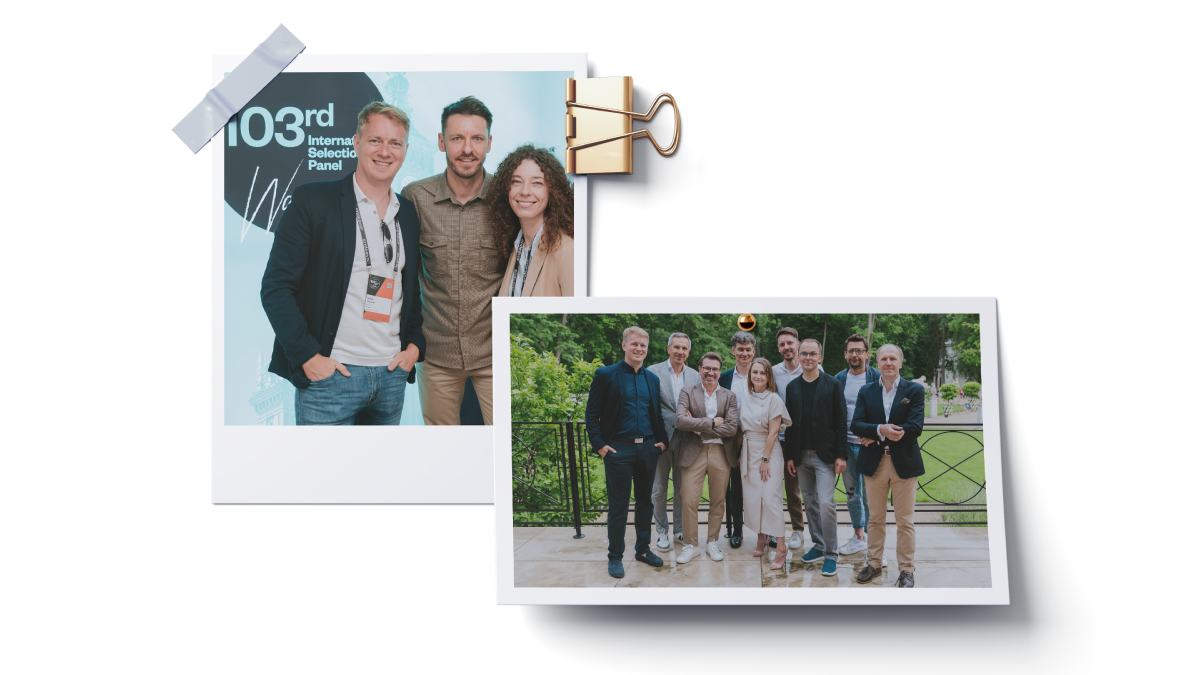
I think this third generation is going to do great things. I get the advantage of both the bird’s-eye view and the close-up, in my roles as Managing Partner for Alfabeat, a seed fund for enterprise software companies from Central and Eastern Europe, and since 2022, when we opened our doors, as Endeavor Poland’s Managing Director.
Across Poland, things are brewing. Warsaw has the only Google Campus in Europe: the Cambridge Innovation Center, where our Endeavor office is located, hosts over 175 companies. The third generation is graduating, exploring, building. Who knows, maybe even registering a company, maybe deep in stealth mode.
At Endeavor Poland, we’re here to support them. And VCs globally would do well to keep their eye on Poland’s third generation — I have a feeling our next big success story will be truly local.
Maps from Elsewhere
Warsaw’s startup scene doesn’t live in boardrooms. It happens over coffee between investor meetings, inside coworking spaces packed with tech teams, and at events where founders feel part of a community.
Our Polish team put together the map below, highlighting the places where the ecosystem actually comes to life, where entrepreneurs, investors, and builders cross paths, exchange ideas, and start the conversations that later become part of Warsaw’s startup lore.
Click here to explore the map.
Warsaw is the starting point. But Poland’s entrepreneurial story stretches well beyond the capital. If you have the time, here are three places worth stepping into.
1. Kraków’s Old Town
Poland may be young on the entrepreneurial scene, but it’s an old country marked by history, art, tragedy, and achievement. There’s no better place to explore those differing moods than Kraków’s Old Town. Kraków used to be Poland’s capital, and its main square dates back to the 13th century. Explore the churches and museums, and look out for the blue-and-white street food carts which sell obwarzanek — Polish bagels, a great pick-me-up snack for tired feet.
2. Gdańsk Shipyard
If you want to see how Poland reinvents itself, head north to Gdańsk. The historic shipyard, once a symbol of industrial labor and political change, has gradually become home to startups, creative studios, and new tech initiatives. Walk the waterfront and you’ll feel how history and innovation coexist, a reminder that ecosystems often grow from places that learned how to rebuild.
3. Wrocław Tech
Wrocław blends student energy with deep technical talent. Home to major universities and a growing tech community, the city has become a quiet engine for software, gaming, and engineering-driven startups. Spend a day here and you’ll understand how much of Poland’s entrepreneurial future starts with its talent pipeline.
Featured Stories
From the Milky Way to rural Peru – tracking the movements of space’s startup stars



Related Articles