
Spanning dozens of countries, Endeavor Outliers have built high-performing companies in broken economies, raised capital during crises, and held ecosystems together with very little. When new challenges arise, they outperform.
Our Outliers include companies like Cashea, the first effective answer to Venezuela’s nonexistent consumer credit, now processing transactions equivalent to 3% of the country’s GDP and one of the biggest buy-now, pay-later players in Latin America; LemFi, founded by Nigerian entrepreneurs, building a trusted financial platform for diaspora communities, now processing well over $1B in monthly transactions; and Headway Inc., the lifelong learning platform from Ukraine that continues to grow through war, with over 170 million users worldwide.
Even in contexts of extreme uncertainty, Outliers have scaled rapidly and consistently over the past three years or more, half exceeding $100M in annual revenue. Resilience is more of a requirement than a choice — and in a trusted community, these founders find the fuel to keep growing.
Each year’s Outliers class is composed of the top 10% of companies led by Endeavor Entrepreneurs, invited to join a space made for founders to step back from execution, think clearly at inflection points, and engage in the kind of candid peer-to-peer exchange that transforms trajectories.
We update our criteria annually to continually raise the bar, and this year we’ve added a new category for breakout companies with exceptional growth momentum.
The 2026 Outliers fit into one of the following groups:
EARLY BREAKOUT
($30–50M IN REVENUE)
Our fastest growing companies.
Median revenue: $32M
Median three-year CAGR: 427%

SCALING UP
($50–100M IN REVENUE)
Scaling companies growing rapidly.
Median revenue: $67M
Median three-year CAGR: 90%

SCALED & GROWING
($100M+ IN REVENUE)
Our largest companies.
Median revenue: $182M
Median three-year CAGR: 37%

MULTIPLIERS
($500M+ EXIT)
Founders whose companies have gone public or been acquired for $500M+ and are now paying it forward to the next generation of entrepreneurs

2026’s Outliers at a Glance
3 Years
at $1B+
at $10B+
companies
3 Years
COMPANIES
at $1B+
at $10B+
companies
1. Emerging Europe in the spotlight
In absolute terms, our largest markets — Brazil, Mexico, Indonesia, Spain, Türkiye, and the UAE — produce the most Outliers. However, when looking at Outliers as a share of the portfolio, two markets stand out: Poland and Ukraine.
In 2025, Central and Eastern European startups were valued at $280B, more than 2.5 times their 2019 value. Poland and Ukraine were among the top three contributors, representing over 36% of the total at $101B.
Despite their Endeavor offices launching only recently (Poland in 2022 and Ukraine in 2024), both offices have quickly built high-performing portfolios, with nearly 70% of their active companies qualifying as Outliers.
Poland has over 430,000 developers — one of the largest tech talent pools globally — which fuels innovation in sectors like AI, robotics, logistics, and cybersecurity. This environment has already produced founders behind major companies such as OpenAI, DeepL, and Snowflake.
Many of these founders, having built companies across global markets, maintain strong ties to Poland, employing engineering teams locally, maintaining R&D hubs in the country, and mentoring other Polish entrepreneurs. That commitment has been matched by capital: venture funding surged from about $30M annually (2011–18) to over $600M since 2019, fueling a new wave of startups and scale-ups.
From Poland to the world, companies that stay connected to their roots include:
Poland’s first venture-backed unicorn, and then decacorn, ElevenLabs is building advanced voice AI technology that powers next-generation digital experiences. The company reached an $11B valuation in 2026 and it maintains a major global R&D hub in Warsaw, where it actively nurtures the local AI ecosystem through meetups, hackathons, and partnerships with universities.
Founded by Polish entrepreneurs in Finland, ICEYE is building a new generation of synthetic aperture radar (SAR) satellites capable of capturing high-resolution images through clouds, smoke, and darkness. Originally focused on environmental monitoring, the company has become a key player in Europe’s evolving defense landscape as demand for space-based intelligence accelerates, and it is now valued at $2.8B.

Ukraine’s startup ecosystem stands out for its global-first mindset. Coming from a smaller market, two-thirds of the country’s startups have focused on international customers from day one. Now facing the disruption of war, many Ukrainian founders have relocated their companies at least partially abroad.
However, similar to Poland, these entrepreneurs are building global companies while staying deeply connected to home, hiring Ukrainian engineers and supporting the ecosystem from abroad.

Ukraine ranks fourth worldwide for developer talent and has produced well-known unicorns like Superhuman (fka Grammarly), GitLab, Creatio, and People.ai, as well as entrepreneurial success stories such as Jan Koum, who co-founded WhatsApp, and Max Levchin, who co-founded PayPal — both Kyiv-born. Ukraine has also added four new venture capital funds since 2023, with growth investor Horizon Capital closing a $350M Fund IV in 2024. In 2025, Ukrainian tech companies raised $498M in equity and grant funding, compared to $462M in 2024.
Here are some of the companies building the ecosystem locally:
Born out of revolution and shaped by war, Ajax Systems has built resilience into its DNA. An international tech company and the largest manufacturer of security systems in Europe with almost 5 million users in 180+ countries. With 5,000 employees, it continues to scale globally, having opened its fourth manufacturing facility in Hanoi in 2025.
A global language-learning marketplace, Preply is connecting students with 100,000 tutors worldwide. The company now employs 750 people, including a committed team in Kyiv, and recently reached $1.2B valuation after raising a $150M Series D. Blending human tutoring with AI-powered tools, Preply continues to scale a model of learning that is human-guided and amplified by technology.
2. A new tech stack for a new world
The 2026 Outliers class offers a window into the innovation shaping global tech today. Beyond geography and growth metrics, this year’s class highlights how the most ambitious entrepreneurs are pushing the boundaries across finance and artificial intelligence.

From practical crypto applications to diaspora-led AI companies in Silicon Valley, these stories reveal how Outliers are building technology that moves markets — and people — forward.
Crypto is evolving beyond trading and custody. Both veterans and new Outliers are applying blockchain technology to solve tangible real-world problems, improving the speed, cost, and accessibility of payments, remittances, and cross-border money movement.
Among the companies that have been part of the Outliers class for many years, for example, Bitso — born in Mexico as a bitcoin exchange platform — has expanded into cross-border B2B payments by building stablecoin-based rails that enable faster and cheaper remittances and enterprise transfers across Latin America. From Argentina, Xapo, originally a crypto wallet, has transitioned into a licensed digital bank, combining crypto and fiat services to offer USD accounts, payment capabilities, and wealth management products tailored to users in regions with limited access to stable banking.
Meanwhile, some of our most recently selected Outliers, like Rain (Puerto Rico) and Félix (Miami, U.S.), have embedded blockchain infrastructure into financial products from the start, with stablecoin adoption driven by inefficient financial systems and volatility.
Rain (Puerto Rico) enables companies to issue cards and payment programs powered by stablecoins, making crypto usable for everyday payments. Valued at $1.95B, Rain’s technology facilitates more than $3B in annualized transactions for over 200 partners.
With $1B in remittances and 250,000 new users in one year, Félix (Miami, US) is a WhatsApp-based remittance service that uses stablecoins behind the scenes to send money across borders quickly and cheaply.
AI is driving record levels of venture investment, with over $200B deployed in 2025, marking the first year it accounted for more than half of all global VC funding. Amid this surge of capital and innovation, the 2026 Outliers showcase how diaspora founders are shaping AI for the world while staying connected to their roots.
Leveraging global experience and technical expertise, these entrepreneurs are building foundational models, application-specific platforms, and AI-enabled tools that impact industries from software and creative workflows to education.

By building companies that operate across continents, diaspora founders are also expanding opportunities for engineers and builders in their countries of origin, extending innovation to more regions, and they are often uniquely positioned to design AI systems that better reflect global realities.
Co‑founded by a programmer from Jordan, Replit democratizes software creation using AI, powering millions of developers worldwide. The company has also supported initiatives such as AI-powered learning assistants in Jordan, extending innovation back to the region where its co-founder grew up.
Fal, founded by Turkish engineers with experience at Coinbase and Amazon, provides high-performance infrastructure for generative AI, enabling large-scale image, audio, and video creation. The company illustrates how diaspora founders translate local expertise into global impact.
Founded by two Chileans and one Greek, Runway builds multimodal AI models that transform creative workflows for designers, filmmakers, and content creators, combining deep technical innovation with broad accessibility.
3. New global expansion pathways
When Endeavor started 30 years ago, founders from Elsewhere built primarily for their home countries. Even 10 or 15 years ago, you would not have seen as many companies with a strong international presence.
Of this year’s 238 Outliers, over 80% operate beyond their home markets, and nearly half across regions. But beyond the more common pathways — like scaling into neighboring countries and large global markets — new, less obvious expansion corridors have emerged, proving once again that world-class companies can be built anywhere.
Instead of heading to large developed markets, these companies have decided to transfer hard-earned operational know-how, often built in complex, resource-constrained environments, into ecosystems facing similar challenges — some of which Silicon Valley had never faced.
A strong local presence enables companies to build trust, navigate regulatory nuances, and adapt offerings to new cultural and economic contexts. Often, they become more defensible because of it.
- Kavak: A leading used-car marketplace and Mexico’s first unicorn, Kavak built its capabilities in fragmented, trust-deficient auto markets around Latin America, but also in Oman, Saudi Arabia, Türkiye, and the UAE.
- Tyme Group: South Africa’s first digital-only bank — and one of the fastest-growing in the world — has leveraged its expertise in serving underbanked populations to expand into the Philippines. It’s also backed by Nubank, Brazil’s largest fintech.
- EBANX: Born in Brazil, EBANX provides payment and SaaS infrastructure for global merchants, with established offices to help clients navigate cross-border complexity in more than 20 countries in Latin America, Africa, and Asia.
- Pickup Coffee: A tech-enabled coffee chain from the Philippines, Pickup Coffee has scaled by combining affordability with operational efficiency, all the way from Southeast Asia to Mexico.
Shared language reduces friction across every layer of the business, from customer acquisition and brand trust to regulatory navigation and partnerships. When combined with cultural affinity, it allows companies to scale faster and more efficiently, entering new markets with a level of familiarity that would otherwise take years to build.
- CoverManager: A Spain-based hospitality software company, CoverManager provides reservation and guest management tools for restaurants. In 2025, it partnered with Zenchef to form a major European and Latin American restaurant revenue management platform, serving over 36,000 restaurants across 20 countries.
- Yassir: From Algeria, Yassir is a francophone super app that aims to revolutionize mobility in Africa by providing an ecosystem of services centered around ride hailing. In recent years, they also expanded to France and Canada.
- Mercado Bitcoin: One of Latin America’s largest crypto platforms, Mercado Bitcoin began in Brazil and it’s now expanding into Portugal as a natural entry point for growing its presence in the European Union.
- Cabify: Founded in Spain, Cabify is a ride-hailing platform that expanded early into Latin America, now operating in 6 Spanish-speaking countries outside of Europe, where it has evolved beyond ride-hailing into a broader mobility and logistics platform serving both consumers and businesses.
Together, Outliers show that global scale is no longer the exception for companies Elsewhere; it is increasingly the expectation.
Moove is a Nigerian-born mobility fintech that provides vehicle financing to ride-hailing and delivery drivers, helping thousands access cars without traditional credit. Now operating across seven countries on three continents, the company has expanded globally through partnerships and acquisitions, including the purchase of Brazilian Endeavor company Kovi, to accelerate its Latin American growth.
Insider is a Turkish unicorn marketing technology platform that helps global brands personalize customer experiences using AI-driven data and automation. Serving thousands of enterprise clients worldwide, the company has built a broad international footprint with over 30 offices across the Americas, Europe, Asia, Oceania, and the Middle East.
Wellhub (formerly Gympass) is a corporate platform that gives employees access to gyms, fitness studios, and digital wellbeing services through employer benefits programs. With more than 20 million employees covered, and a valuation above $2B, the company — founded in Brazil — now operates across more than a dozen international markets as it expands its global workplace wellness network.
Finding their people
In many ecosystems, there may be only a handful of founders navigating the same level of complexity. Sometimes, none at all. At that stage, the playbook that worked before often no longer applies, and few people locally truly understand the stakes.
Endeavor Outliers closes that gap through a series of online and in-person gatherings throughout the year. These initiatives are designed to meet founders where they are, supporting them at key company inflection points — like the AI in Practice program for companies integrating AI solutions or scaling AI-enabled teams, and the Paths to Liquidity program tailored for later-stage entrepreneurs actively exploring an IPO or M&A, or navigating partial liquidity in the interim.

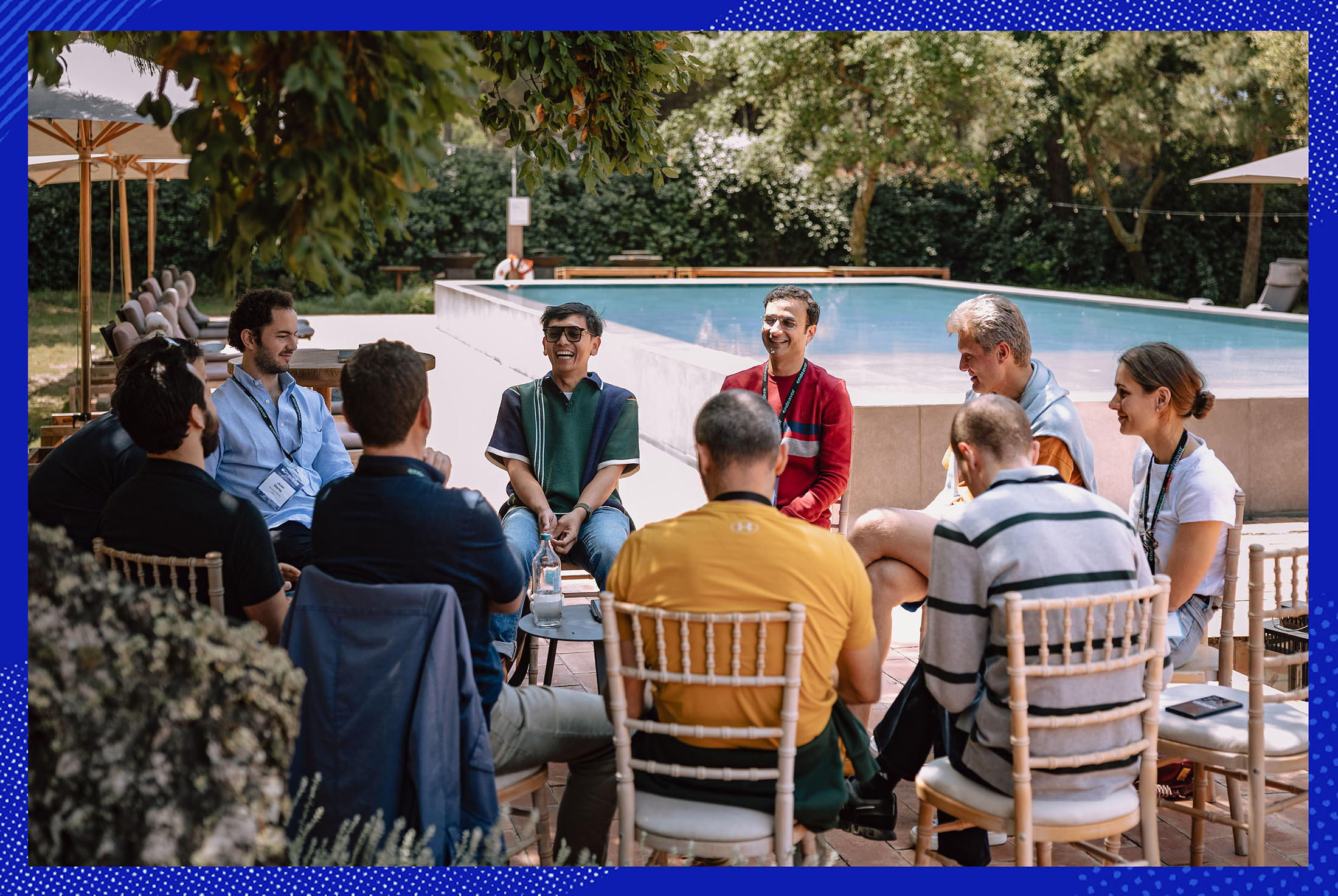
But beyond business milestones, they focus on personal leadership evolution. At the Outliers Retreat, for example, Endeavor brings the entire class together in Comporta, Portugal, for three days away from meetings and metrics, to think through complex choices, speak candidly about tough leadership decisions, and engage with peers in conversations that only happen when the room is small and trust is real.
That’s why Outliers is not just a recognition of scale, but a response to what scale demands: growing as a leader, learning from others, and supporting each other. Resilience moves them forward, but peers’ perspective helps them see the road ahead more clearly.
In a strong community, when the world fractures and the playbook falls short, what changes is not the challenge itself, but how it is carried. For founders used to navigating instability on their own, that’s a powerful reminder that even (and especially) in uncertain times, they don’t have to build alone.