What does the future of entrepreneurship look like? Here’s our first draft.
Investors are always trying to predict the future. What if we built one instead?
Hello from the future.
It’s 2035, and success means something different here. The last 10 years have changed our understanding of what counts as making it. We’re no longer only climbing to the top; we’re stretching our horizons. Instead of obsessing over one-off unicorns, we’re invested in building communities, entrepreneurial ecosystems, and founders who are bringing others with them to the top.
We have new metrics here. Net worth valuations are only the first mark of a successful entrepreneur: alongside, we’re also recognizing founders by how many other founders they’ve mentored, trained, and invested in. A founder’s ultimate success isn’t an IPO — it’s the day her protégés form their own companies with her support as an angel investor, multiplying her impact for others as well as her own personal and professional achievements.
Naturally, where innovation and business lead, the world follows. So children in schools trace lineage, not just timelines, and in university we study ecosystems, not just economies. Governments provide impact reports not just on GDP but “Generational Founder Indexes”, measuring how many founders were born from the seeds of one founder’s journey. Boardrooms ask not just, “How fast did you scale?” but “Who scaled because of you?”
This is the version of the future we’re moving toward as we change the language around success. Here are the first steps to building our new vocabulary.
Founders dream bigger than their own companies
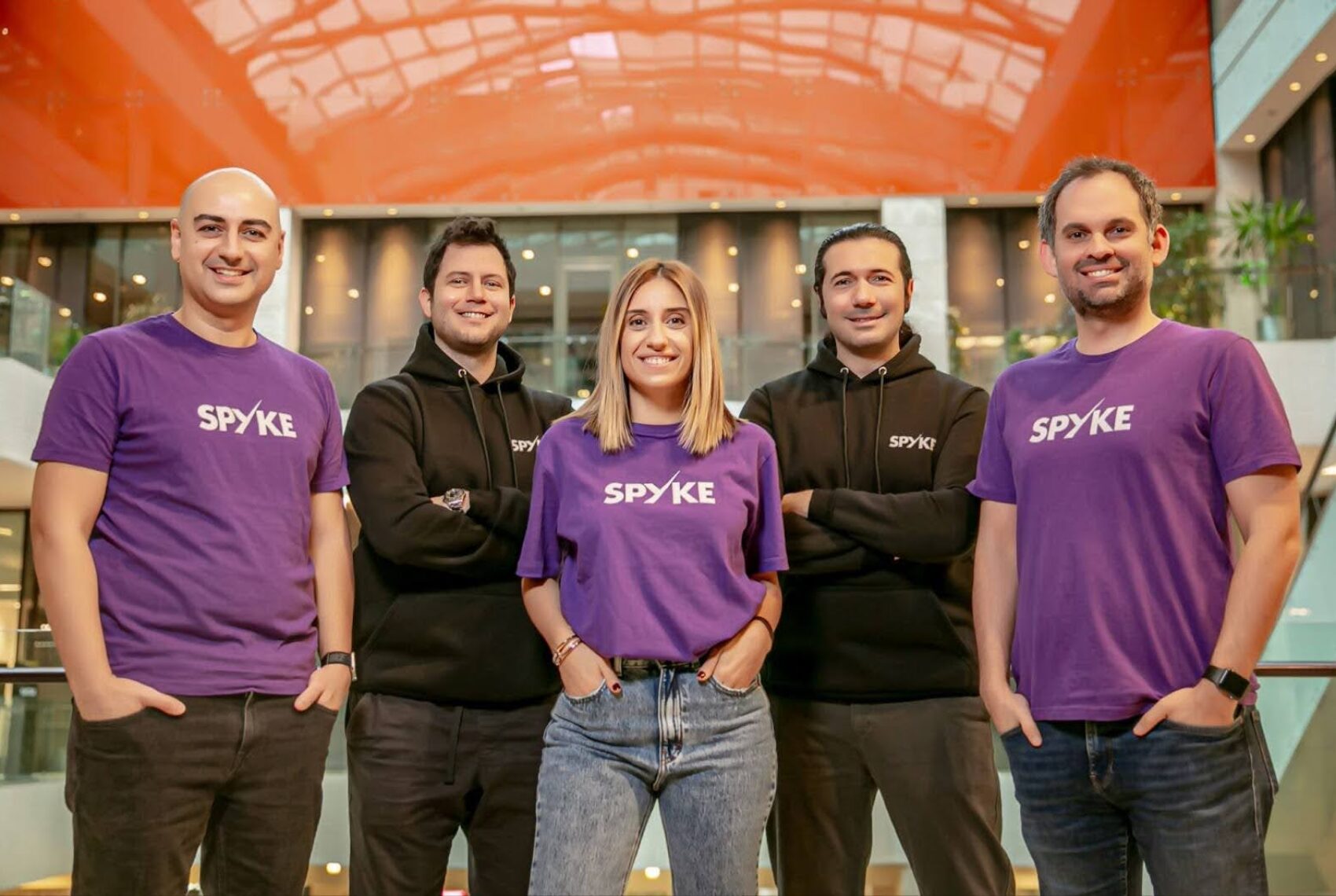
Traditional startup success narratives feature a lone genius and a singular triumph. But already, key entrepreneurs are restless with this definition. Founders like Mudassir Sheikha from Careem and Rina Onur from Spyke Games have bigger horizons in sight; they understand that high-impact entrepreneurship is relational.
Someone like Rina could set the playbook for future founders. She co-founded Peak Games, which became Türkiye’s first unicorn in 2020 with a $1.8B deal. From Peak spiralled 65 new startups founded by 85 ex-Peak employees. Not content to rest on her laurels, Rina launched 500 İstanbul, an early-stage VC fund which invested in companies like Insider, Paraşüt, BillionToOne, and Firefly. Then she went on to found Spyke Games, which raised a record-breaking $55M seed round and which, like Peak Games, has the potential to see many new founders come from its ranks.
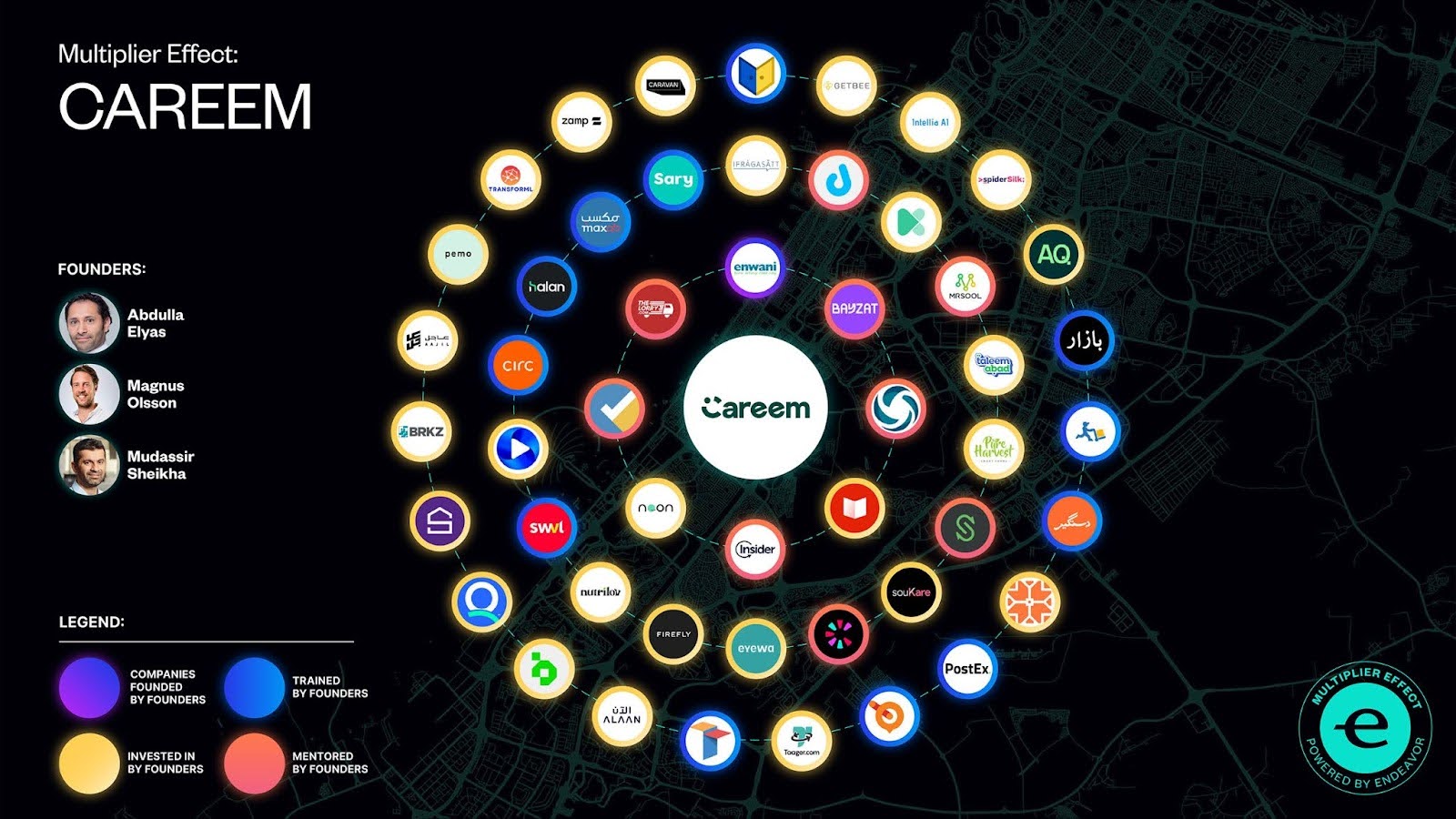
Similarly, Mudassir is known for fostering the “Careem Cartel”, a living example of what here at Endeavor we call the Multiplier Effect, where founders develop their local ecosystems by training, mentoring, and investing in the next generation of entrepreneurs. Based in Dubai, Careem is a super-app that connects users with ride-hailing, food and grocery deliveries, digital payments, home services, bike rentals and more. Careem was the first unicorn in the Middle East outside of Israel and has made major deals with Uber and Emirates Telecommunications Group Company. But the impact of Mudassir and his co-founders, Magnus Olsson and Abdulla Elyas, goes far beyond Careem itself.
Over 300 former Careem employees started their own companies, and Careem itself has invested in more than 90 companies across the region and globally. The credit for the Careem Cartel lies in the company’s internal culture, where focus is on fit and ambition as well as greater company success. It’s common for the founders to ask employees about their personal goals, and to encourage them to leave — with Careem’s support and blessing.
The ramifications of Rina’s and Mudassir’s impacts in their local ecosystems are already clear, but we’re also excited about the new narrative they’re building: a relational, supportive sense of foundership that carries others with them.
We focus on metrics that matter
Profit is great. But by its very nature, profit is limited, impacting only a relatively small group of people. To reach our dream future, we need to ask not just, “What did this startup make?” but “What did this startup make possible?”
In the grand scheme, those answers will matter more than valuations and revenue. So let’s update our success dashboards and metrics to reflect them. We need to put the weight on those less visible elements that make success possible: Mentorship sessions. Peer investment. The effect of a network.
This isn’t just altruism at work. The same efforts to lift up others multiply one’s own personal and professional success. It means that founders will have the chance as angel investors to get in at the ground level on their region’s next unicorn — because they mentored and monitored the people who would build it.
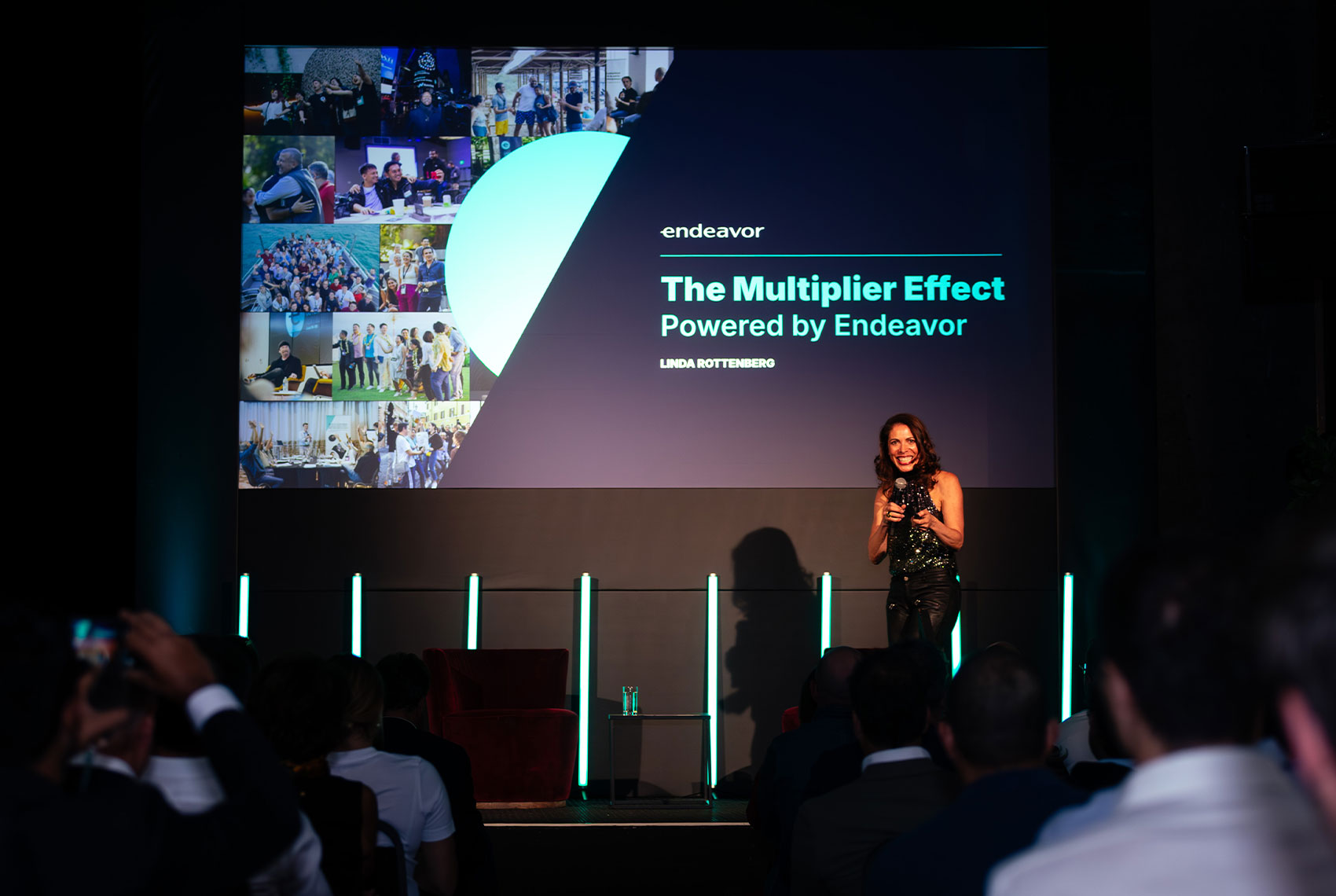
As Silvia Cavalcanti from Endeavor shared at the Multipliers event in Dubai, “It may sound counterintuitive, but to mentor others, investing in the next generation, and inspiring your own team to eventually start businesses of their own doesn’t just strengthen the ecosystem — it accelerates your own growth.”

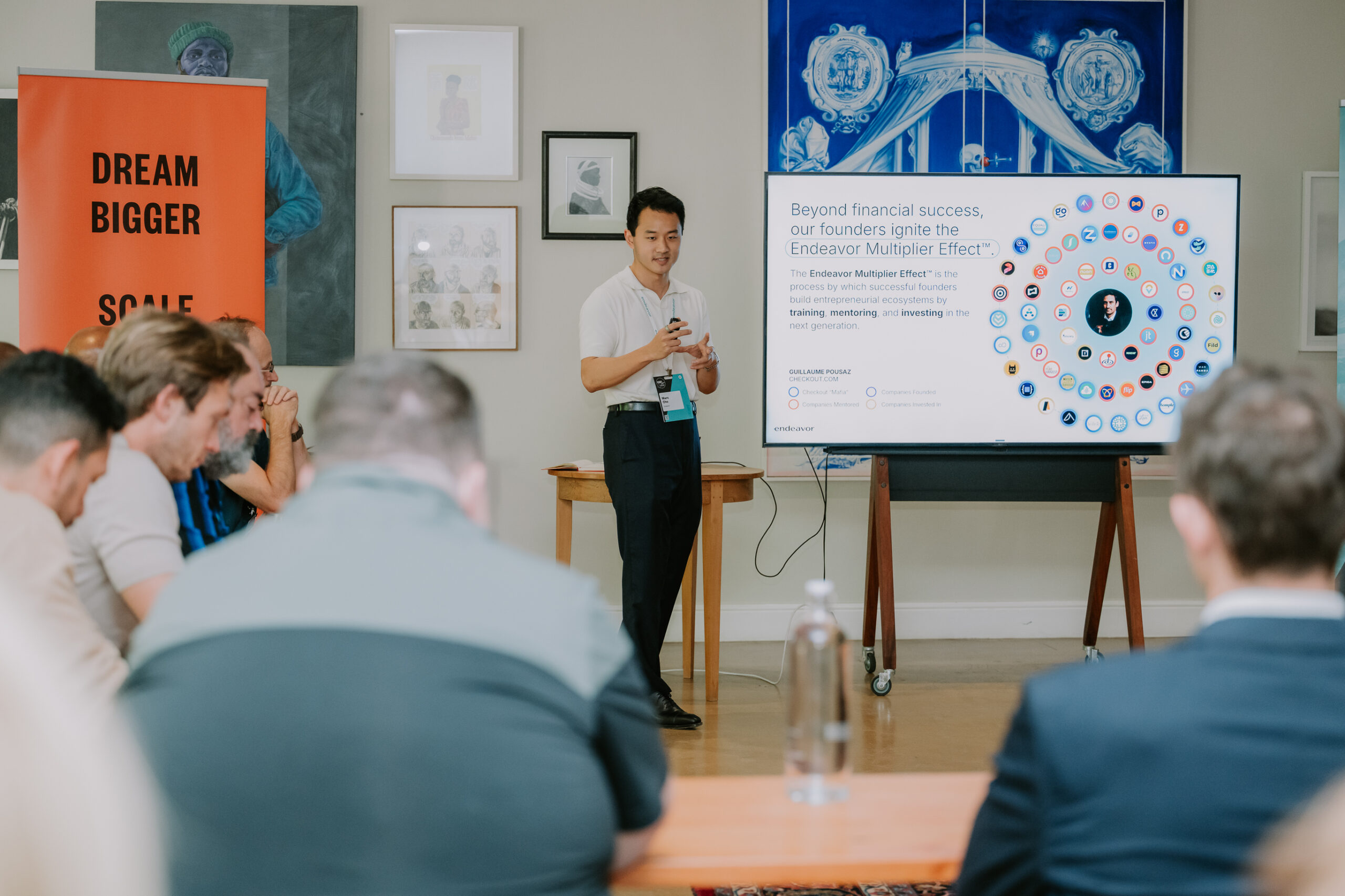
Here at Endeavor, we track these metrics with our Multiplier Map, which visualizes the compound impact that Endeavor Entrepreneurs have in their communities. Multiplier Maps illustrate not a founder’s growth, but their gravitational pull.

Just like investing outside of Silicon Valley, these questions are the kind of rebuttal to a traditional narrative that tends to get dismissed as pure idealism. But following the Multiplier Effect is actually a useful predictor of success. We found that most successful founders are twice as likely to have received experience, mentorship, or investment from an entrepreneur who’d already led a company to scale. In 2035, we’d love to see the Multiplier Map become as meaningful as the cap table.
When entrepreneurial success changes the game(board)
Founders are innovators by their very nature. It’s not unusual to see entrepreneurs transform a whole industry. Think of how Uber and Lyft reshaped transportation, disrupting taxi services and leading to the rise of the gig economy and a whole new range of services around ride-hailing logistics, digital payments, and real-time mapping.
Entrepreneurs have introduced new business models, driven down costs with technological advances, and accelerated adoption of emerging tech. If they adopt these new models of success, it’s likely we’ll see other industries do so, too.

Lawyers will be judged not only on how many cases they’ve won, but also on how many young lawyers they’ve mentored. A chef’s true success isn’t how many stars they earned, but how many chefs they invest in who went on to open their own restaurants. Scientists will be recognized not only by citations, but by how many discoveries were sparked by their open data.
And everyone will have their own Multiplier Map — including you and me. How would yours look?
Featured Stories
From the Milky Way to rural Peru – tracking the movements of space’s startup stars




Related Articles