From the Milky Way to rural Peru – tracking the movements of space’s startup stars
Cheaper satellites and lower launch costs have demolished technological barriers to space entry, ushering in a new era where more founders, more countries, and more use cases are in orbit than ever before.
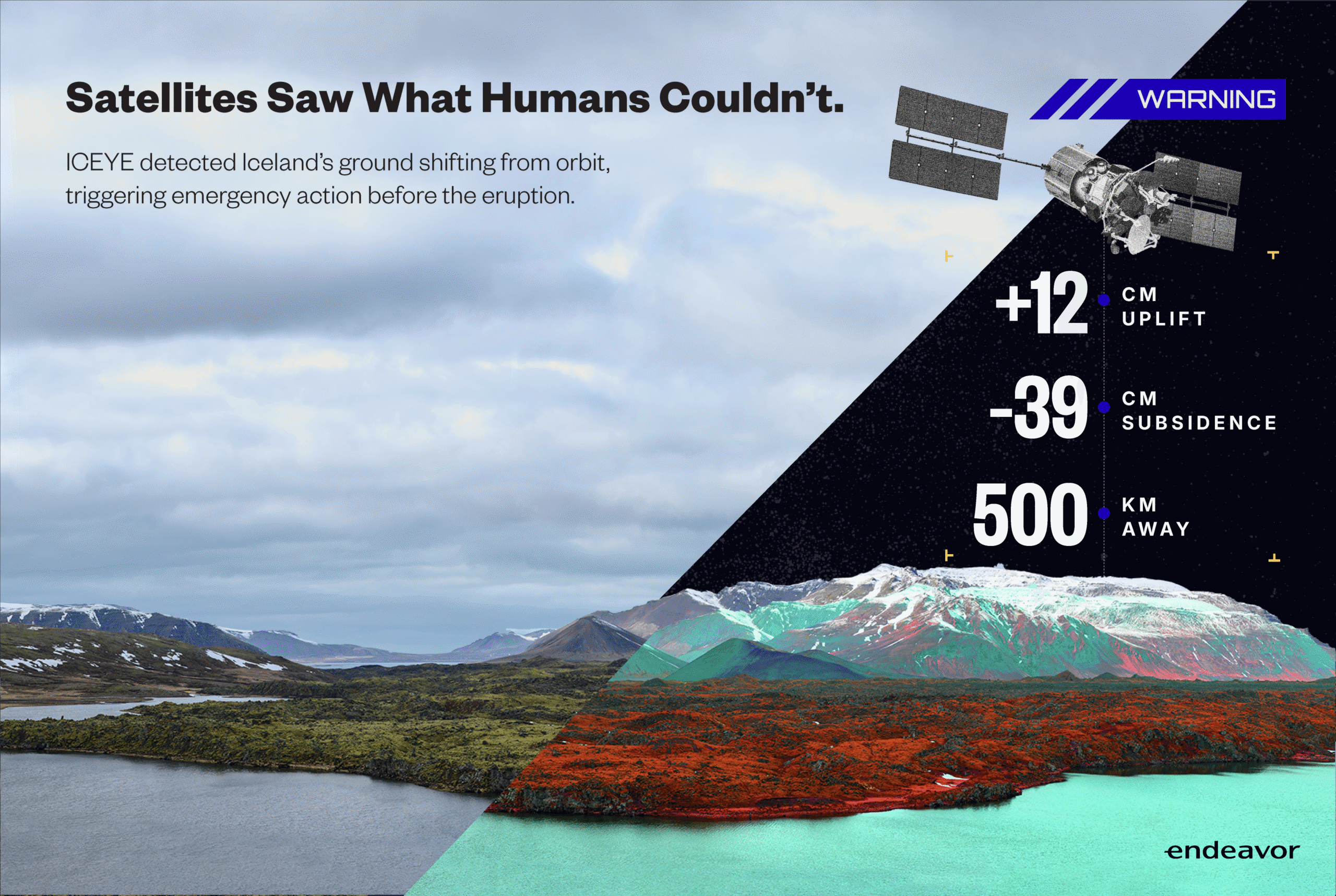
In October 2023, the Icelandic ground was shifting underfoot. The movement was small enough that it was undetectable to the human eye, but satellites owned by European startup ICEYE picked them up from 500 kilometers away: 12 centimeters higher here, 39 centimeters lower there. The tiny shifts were indicative of something big. Deep in the Earth’s core, molten lava was on the move.
ICEYE alerted the Icelandic government, which declared a state of emergency and ordered the region’s evacuation. A month later, the volcano exploded.
From elite to Elsewhere
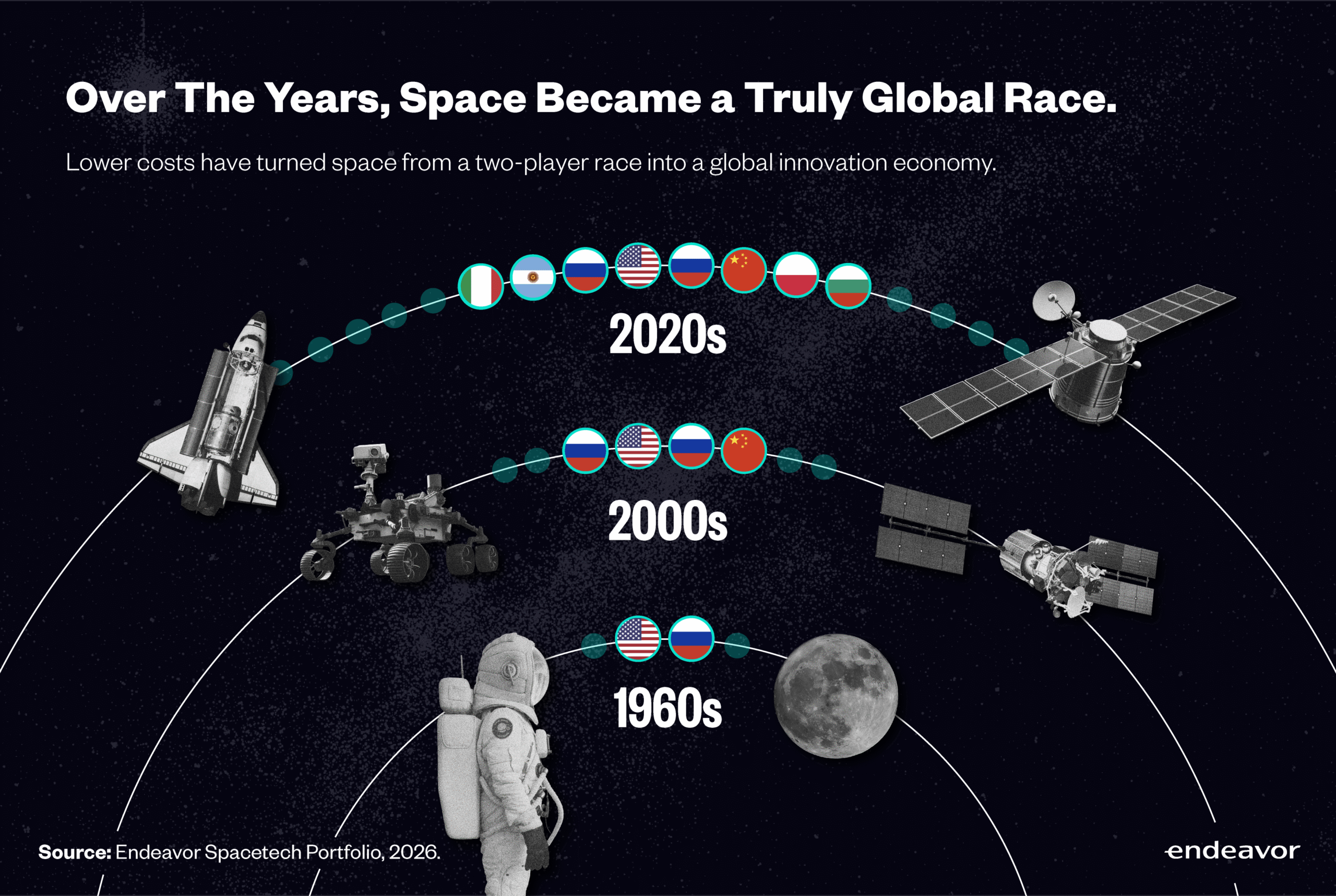
The space race started as two players, and grudgingly allowed a few extra entrants over the past decades: the US, Russia, China, and India. But new technological innovations have led to lower deployment and launch costs as well as easier processing of large amounts of data, meaning that space has become truly global.
ICEYE is part of this movement, one of a group of companies known as “NewSpace” revolutionizing fields as diverse as communications, manufacturing, and renewable energy. “I’d characterize [ICEYE] as a European company,” Rafal Modrzweski, ICEYE founder and CEO, said at an Endeavor Catalyst meeting in 2024. “I’m Polish, and I was part of an Erasmus student exchange program in Finland, where I met my co-founder, who is Finnish—Pekka—and we decided to start a company that ended up being headquartered in Helsinki, Finland. Nowadays, we also have offices in Warsaw, Greece, and recently in Spain.”
The Icelandic detection mission was only one of a series of impressive interventions on Earth that ICEYE’s satellites have offered. Since Rafal founded ICEYE in 2014, the company has become the world’s largest constellation of synthetic aperture radar (SAR) imaging, a technology which enables satellites to capture images with huge detail, regardless of weather conditions or the time of day. Along the way, ICEYE has been involved in a range of fascinating projects that change our understanding of how space affects Earth, and vice versa — like the crowdfunded satellite bought by Ukrainian citizens to help destroy Russian military targets.
They’re joined by a range of growing companies, including Bulgaria-based microsatellite specialist EnduroSat, who recently announced a €20M ($23M) funding round with the intention to build one of Europe’s largest space R&D hubs. Space exploration and innovation is coming from across Europe and beyond.
From exploration to Earth
To go bravely where no man has gone before – this was the initial impulse behind space exploration, a race to the universe that involved no small amount of national posturing behind its groundbreaking science. But Endeavor Entrepreneurs exploring space are, by and large, most interested in just one planet: Earth.
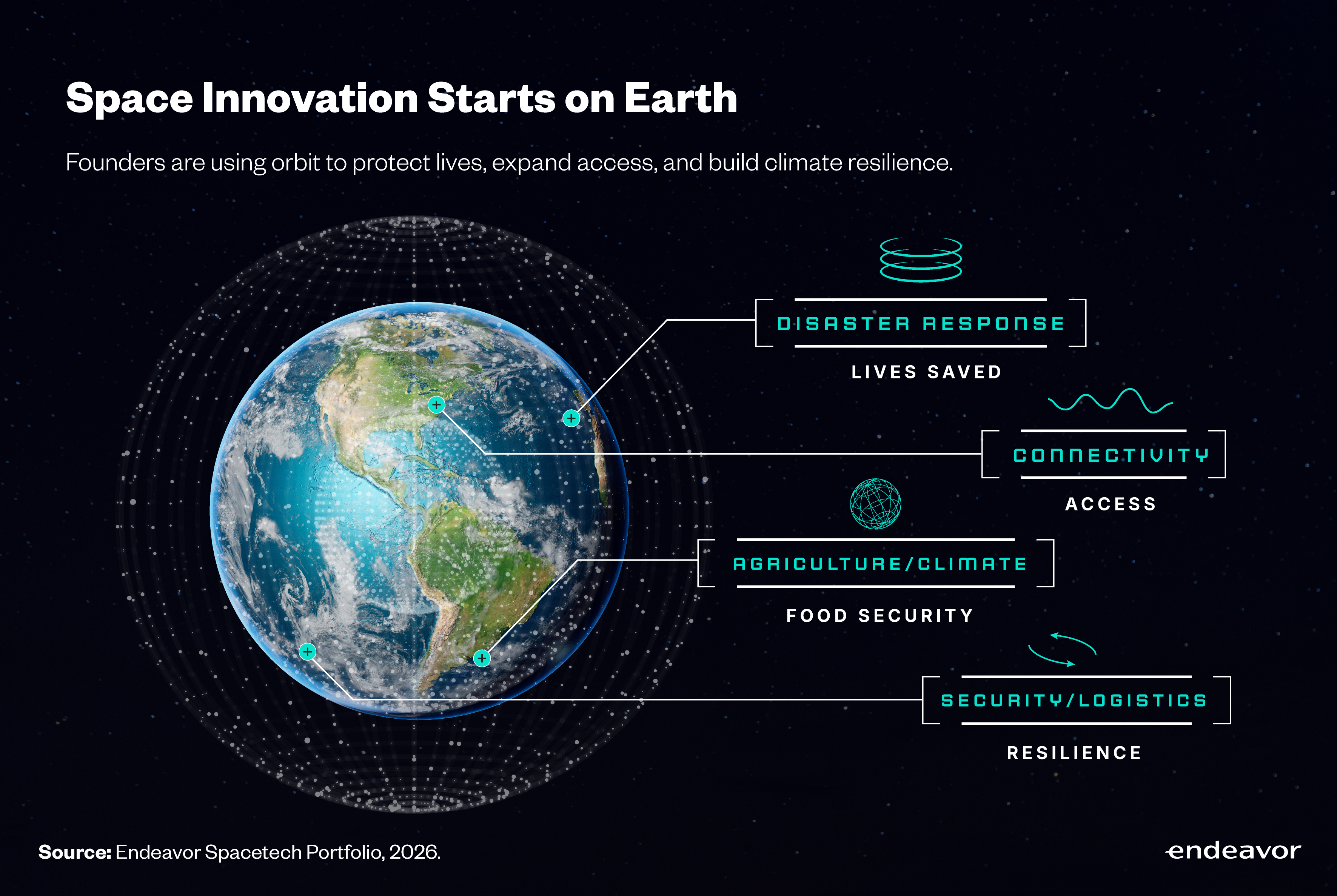
The NewSpace companies share common goals of improving life on Earth with the access and visibility that space offers. For example, SpaceX is popularizing the idea of providing low-latency broadband internet connectivity with global coverage using its network of hundreds, or even thousands, of satellites. This isn’t just a more expensive alternative to fibre optic broadband networks: satellite-based connectivity has the ability to bring the internet for the first time to extra remote areas, like rural Peru, transforming underserved regions and democratizing access to both space and Earth’s resources.
Consider Satellogic, the Argentinian company that has created a network of mass-produced nano-satellites, which provides high-resolution data of expansive areas at a comparatively low cost. Led by Endeavor Entrepreneur Emilano Kargieman, Satellogic works closely with governments and oil, gas, and agricultural clients to offer images a hundred times more frequently and thousand times cheaper than traditional Earth observation companies. The result? The ability to “give the Earth a checkup”.
Similarly, ICEYE’s original mission was to monitor ice in the Arctic, tracking ice melting and icebergs, and enabling new shipping lanes. One of the company’s first government customers, Brazil, uses their satellites to combat illegal logging and forest fires in the Amazon. The viewpoint of space, in other words, offers clear ways to improve life on Earth.
From excess to equilibrium
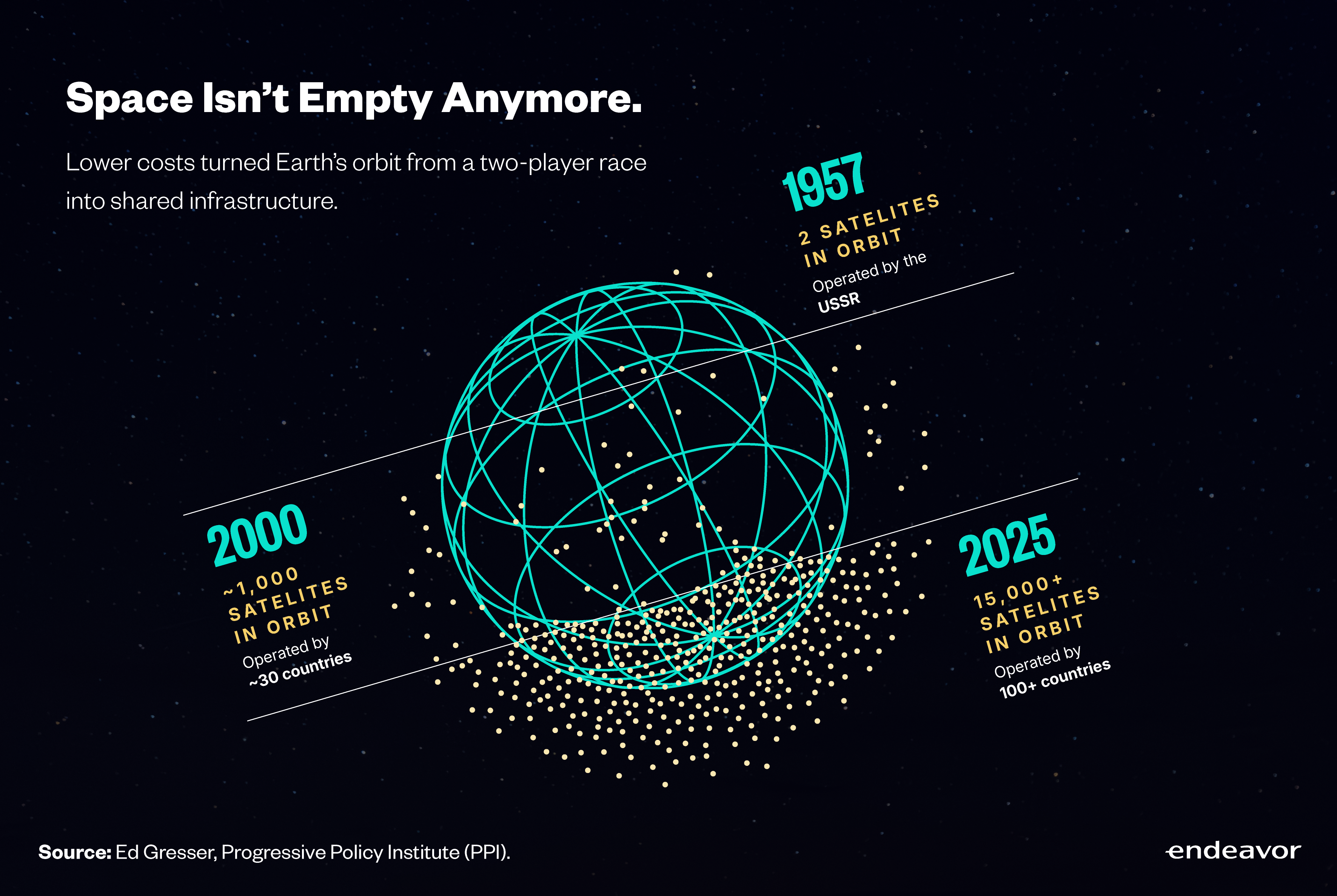
As technological barriers lower and more companies (and countries) get into the space game, we’re seeing a predictable side-effect: space is getting full. SpaceX alone has over 7000 satellites in orbit, and our universe is only going to become more crowded. Alongside functioning space technology, there’s also tens of thousands of pieces of decades-old hardware, some dating back to the Cold War. Besides congesting outer space, space junk also offers a significant and growing threat to Earth in terms of both pollution and the risk of debris hitting something (or someone).
Endeavor Entrepreneurs like Luca Rossettini and Renato Panesi are stepping up to manage this orbital traffic. Luca and Renato’s company D-Orbit, based in Italy, offers space logistic services including moving satellites to different locations and disposing of satellites at the end of their useful life. Another company, Spain-based PLD Space is focused on offering reliable and sustainable access to space with their reusable rockets.
There are amazing services that satellites can offer for Earth. “But to provide those services, a big infrastructure is needed—hundreds or thousands of satellites,” said Renato Panesi, co-founder and CCO of D-Orbit. “And like any big infrastructure, it needs to be maintained, and the approach has to be sustainable. I’m talking about sustainability in space. So I’m adding space as an environment for sustainability, on top of land, air, and water. That’s our job.”
Tech took us further. Now it brings us closer.
Like Neil Armstrong’s one small step for man, things that seem tiny dramatically change the game in space. Less famous than Neil’s footstep is Robert J. Twiggs, a professor of Astronautics and Space Science at Stanford in the 90s and early 2000s, who noticed that his students kept abandoning their satellite projects due to time and cost. Professor Twiggs thought the crucial problem was just how big satellites were, and challenged his students to build a satellite the size of a small box: 10 cm x 10cm x 10cm.
The resulting innovation, the “CubeSat”, was first deployed in 2003. It led the way for smaller satellites built at a significantly lower cost — the kind of breakthrough that allowed many of the companies above to take their next steps. Space tech used to be the domain of established bodies with millions of dollars to their name. Now, startups are showing us that it can come from anyone — anywhere.