What happens after entrepreneurs “make it”?
Some founders cash out and move on. Others change their ecosystems forever.
In 1998, Linda Rottenberg, Co-founder and CEO of Endeavor, met a 24-year-old Patagonian sheep farmer with a wild idea. Wences Casares wanted to build the E*Trade of Latin America but every local investor he pitched — all 34 of them — said no. “You don’t have the right last name,” they’d tell him.
Two years later, Wences sold Patagon for $750M ($1.2B in today’s currency) and became a role model to many: “If Wences can do it, so can I.” For example, two Argentine Stanford MBAs, Marcos Galperin and Hernán Kazah, decided to return home and build Mercado Libre, the first Argentinian company to go public on NASDAQ. Soon after, four engineers quit their corporate jobs to start Globant, which would become the first Argentinian company to IPO on the NYSE.
A similar phenomenon fuels growth in other overlooked ecosystems like Sofia, Lagos, and Manila. In fact, we have watched it play out across 50 markets for about 30 years. What begins as “If they can, so can we” soon becomes “If I got here, I can help others do the same.”
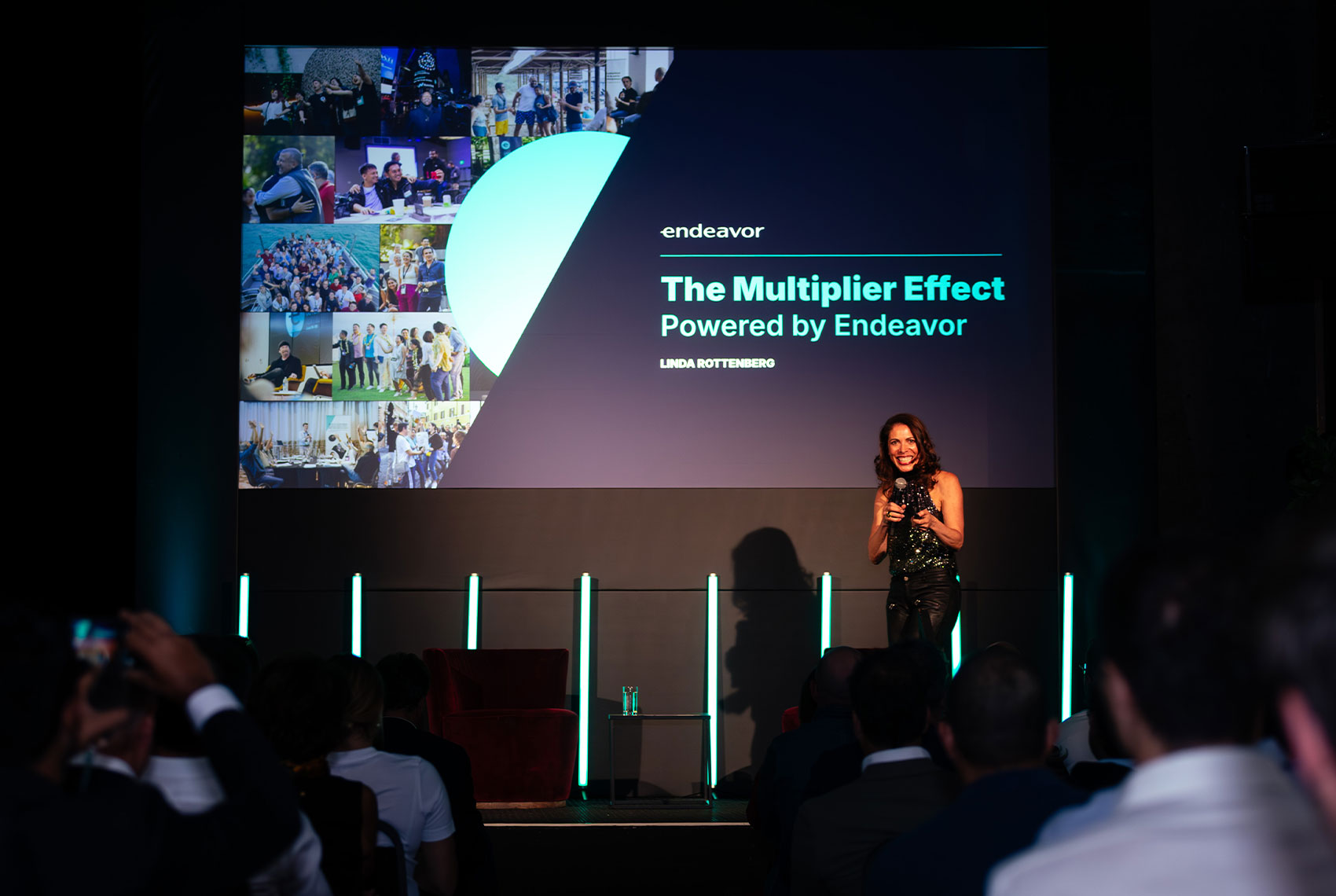
We call it the Multiplier Effect — the compound impact entrepreneurs have in their ecosystems when they go on to pay their success forward by training, mentoring and investing in the next generation.
Here are three things founders do to create a Multiplier Effect and why it works:
1. Mentor: They turn experience into someone else’s advantage
When Argentine software company Globant received a compelling offer to sell in 2007, co-founders Martín Migoya, Guibert Englebienne, Martin Umaran, and Néstor Nocetti happened to be at an Endeavor Selection Panel in Miami. Unsure what to do, they asked Endeavor mentor and Harvard professor Bill A. Sahlman for some thoughts.
“He listened to how we were growing, the customers we had, and asked, ‘Why are you trying to sell? This is great, just keep it to yourselves.’” recalls Martín. “He gave us a totally different perspective.”
So they turned down the offer. Seven years later, Globant went public on the NYSE at a valuation of $400M. Now with a market cap of $2.5B, it employs over 30,000 people in 35 countries — and its founders now mentor others standing at their own crossroads.
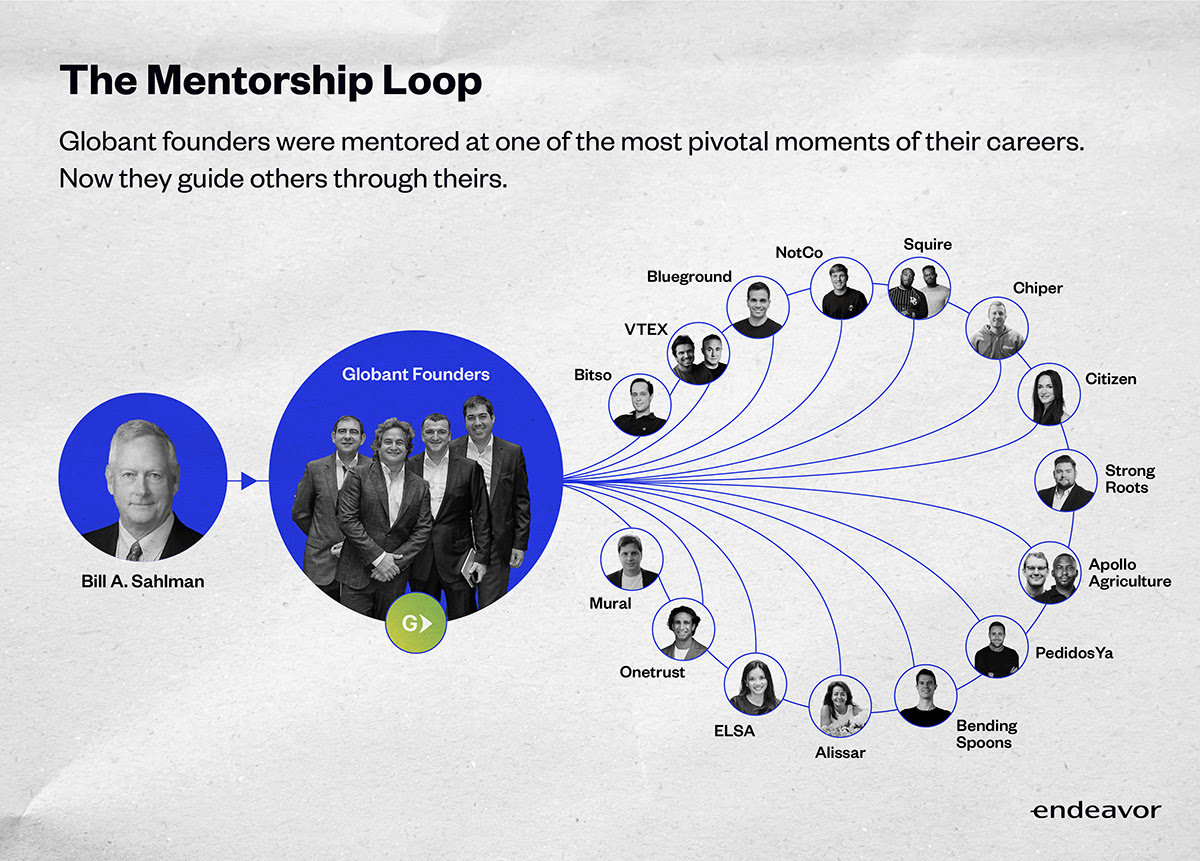
Sure, mentoring includes tactical advice, but it’s first and foremost a tool for sharing experiences, which ultimately helps founders avoid the same mistakes and reduce time to success. That’s particularly important in Elsewhere markets, where political and economic uncertainty can add to the challenges.
For this exact reason, mentoring is also seldom a top-down exchange. Even prominent founders show up as peers rather than gurus, reinforcing a culture where asking for help is a strength. As founders trade lessons across sectors, ideas start to cross-pollinate, turning isolated successes into a mutual learning system. As Sergio Furio, of Brazilian fintech unicorn Creditas, puts it:
“Talk to people. Every time someone puts you in front of a problem, it's like you're attending an MBA. When someone asks you a question, that's an invitation to learn.”
2. Invest: They keep capital (and conviction) at home
When a company goes public or achieves a major exit, it’s easy for founders to park their wealth somewhere safe, get that sweet 10-acre home by the golf course, and end the story there. But in Elsewhere markets, that’s often the reason for new beginnings.
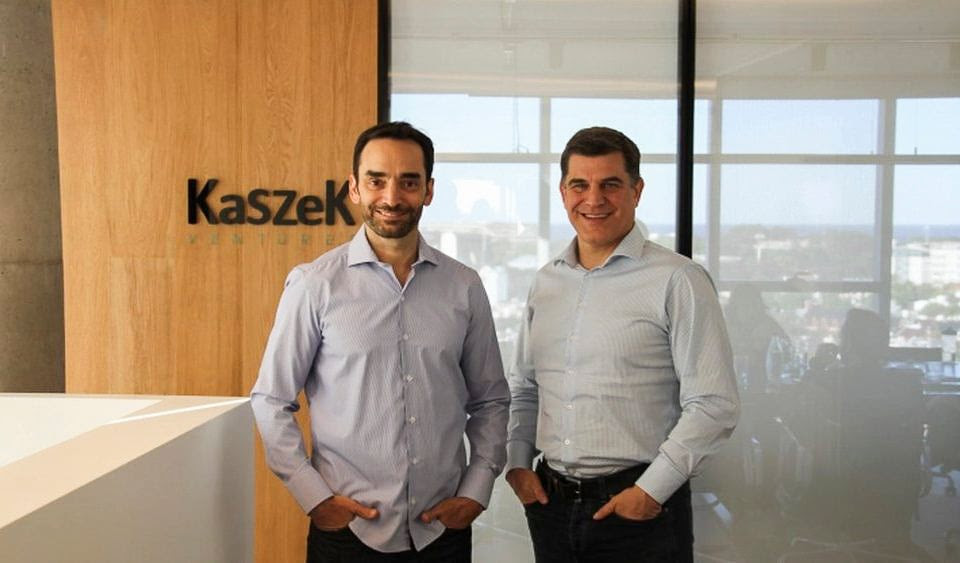
Liquidity events have made it more common for founders to fuel angel rounds, accelerators, and strategic acquisitions. For example, about 30% of all Limited Partners in our rules-based VC fund, Endeavor Catalyst, are Endeavor Entrepreneurs. Then, some go on to start their own firms, such as Kaszek (founded by Mercado Libre’s Hernán Kazah), Latitud (by Viva Real’s Brian Requarth), Yellow VC (by Glovo’s Oscar Pierre), and Init-6 (by Bukalapak’s Achmad Zaky).
In Elsewhere markets, where institutional capital is still hesitant, founder-investors do more than just fill a financial gap: they grow confidence within the ecosystem by betting on it.
Having lived through the same hiring droughts, regulatory mazes, and cash-flow cliffhangers as the companies they now back, they are living proof that success can compound within a market when you embrace it instead of escaping it. And they can also make bigger waves than the average fund because of their local knowledge and connections.
Take Melih Ödemiş, co-founder of Yemeksepeti in Türkiye, a leading online food delivery platform acquired by Delivery Hero for $589M in 2015. In the past decade, not only has Melih made more than 50 investments on his own, but he also launched one of the first business angel networks in his country and helped start the Entrepreneurs’ Organization (EO) in Türkiye, a high-quality support network for entrepreneurs.
When multipliers like them invest, startups learn faster, scale smarter, and the ecosystem becomes stronger.
3. Train and Inspire: They transform one company’s spirit into many
Startup signals have changed. Founders who have been in the founding team of a fast-growing company will have a kind of respect, trust, and attention from the ecosystem that they are unlikely to get from getting Ivy League degrees or other traditional credentials.
When we analyzed 200 unicorn founders both in the US and in emerging markets, only 20% of them worked for a big consulting firm or MAMAA company (Meta, Apple, Microsoft, Amazon, Alphabet) and a third graduated from an elite university, but nearly half had worked for a startup or scaleup before.
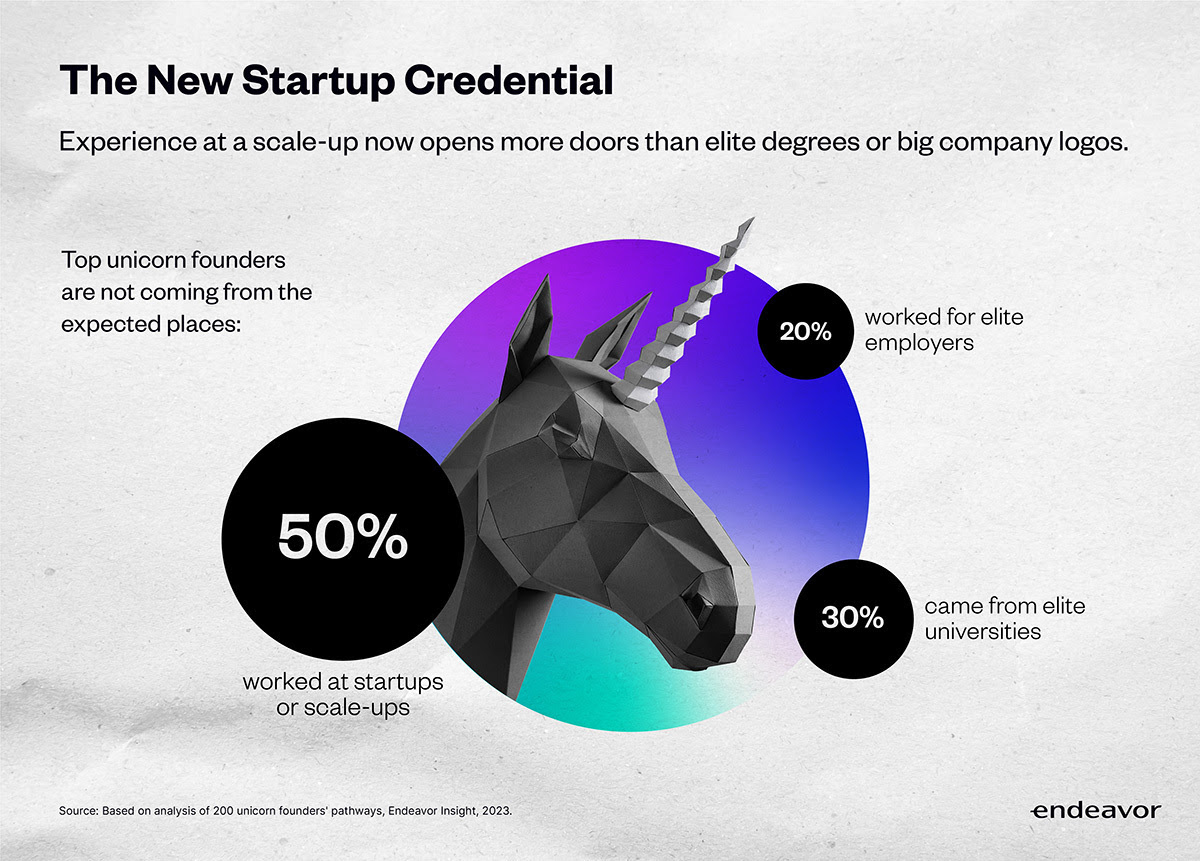
That’s because people leave these companies with operating systems embedded. They’ve seen what works, what doesn’t, and the type of culture they need to build to have a team of entrepreneurs (like them). The Multiplier Effect happens because the startup environment values autonomy, ownership, risk-taking and outsized ambition, unlike most traditional corporations, where careers are optimized for stability.
One of the strongest examples in Latin America is Colombian super-app Rappi, whose former employees have launched more than 130 companies. Among them:
- Latú, a Brazilian business-insurance software startup that raised $6.7M so far.
- Houm, a Chile-based proptech that has raised $44.5M.
- Yuno, a leading payments orchestration platform with over $1.5B in transaction volume.
Across the Atlantic, Telerik makes another strong case. In 2014, the enterprise software company was acquired for $263M in what became Bulgaria’s largest exit, seeding nearly 40 new ventures built by ex-employees. Its founders went on to create Campus X, now home to early-stage VCs, Eleven and LAUNCHub Ventures.
“This is what I’m most proud of,” says co-founder Vassil Terziev, today also Sofia’s mayor. “My colleagues gained not only knowledge and entrepreneurial spirit but also the financial stability to start their own companies.”
Rather than fear these departures, founders celebrate, mentor, and sometimes even invest in their spinouts — and so the virtuous cycle continues.
 Brex, an Endeavor company started by two Brazilian serial entrepreneurs, welcomes “quitters” to the team.
For investors, spotting Multipliers early can change how a portfolio grows over time. Founders who mentor others, back local startups, and inspire new spinouts often build stronger cultures and attract better talent. Their networks keep generating new opportunities long after their own exits.
Next time you meet a standout founder, go ahead and ask about unit economics and burn; then add three questions that matter just as much:
- Who are you mentoring this quarter?
- Which local founders have you backed, either financially or with your reputation?
- How many alumni from your company have started something you’re proud of?
If we all tracked those as closely as we track metrics like revenue, we’d spot tomorrow’s Multipliers much sooner.